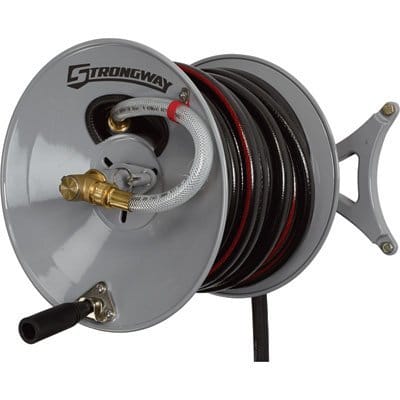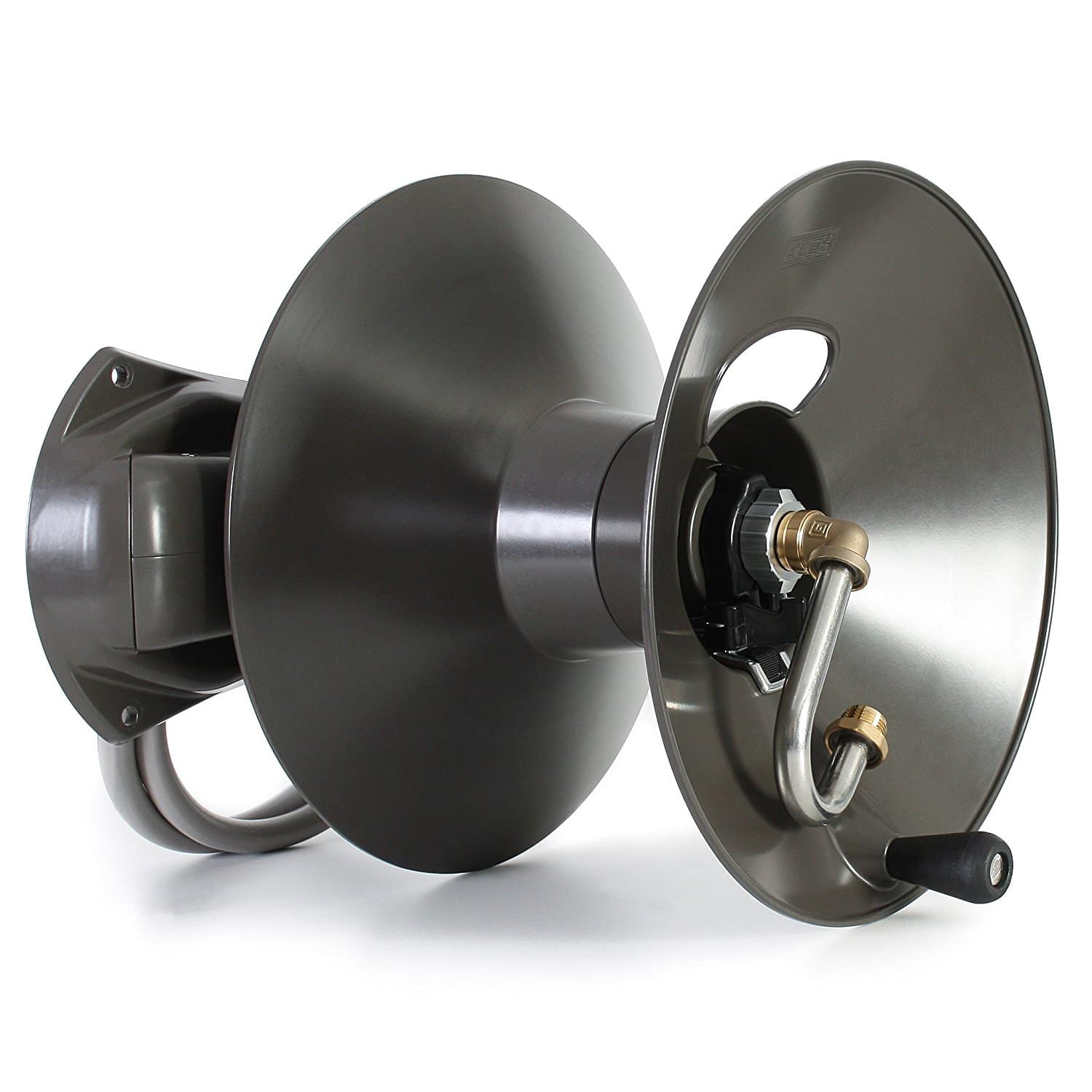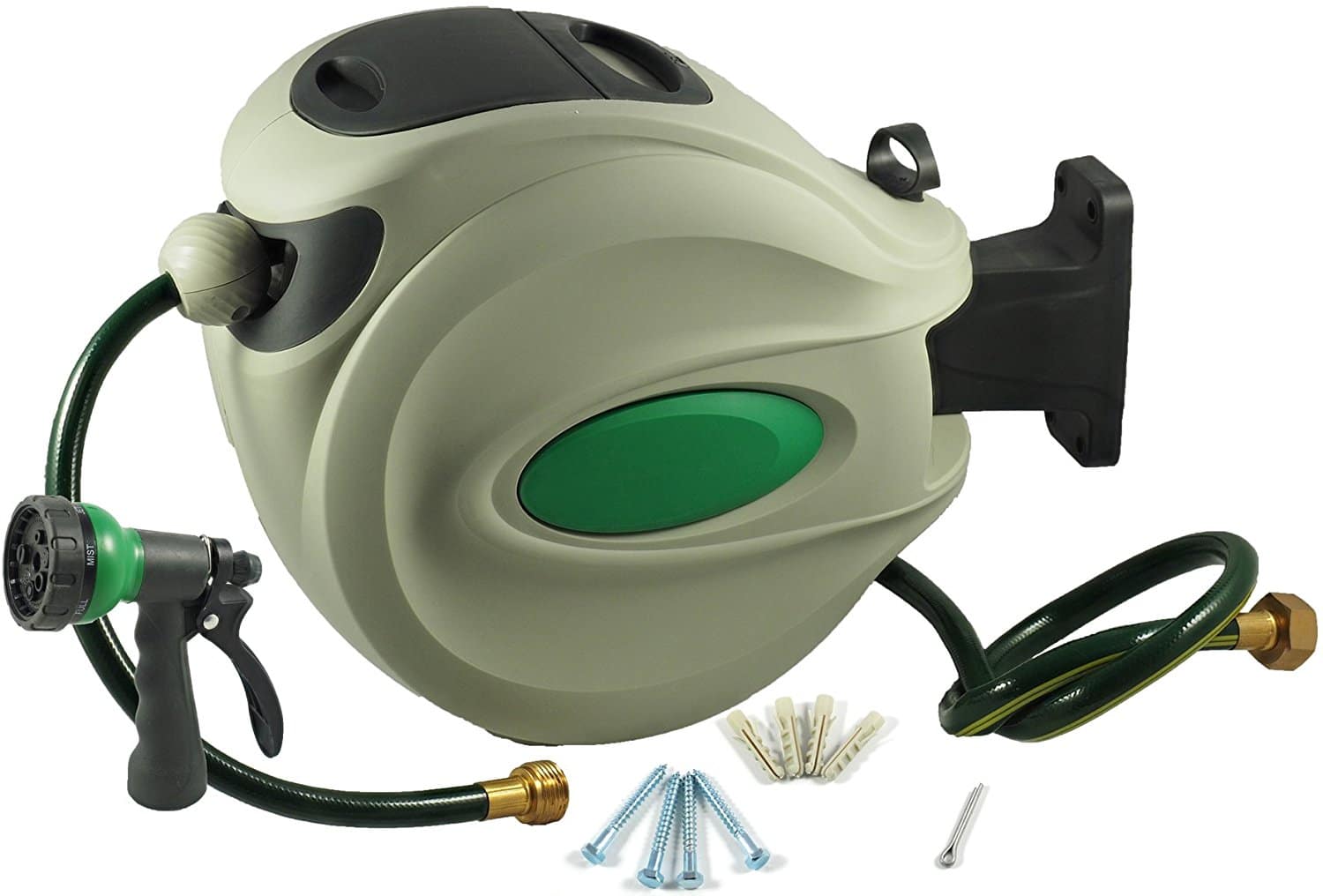
Before buying an Ikris retractable garden hose reel, confirm the exact model, included hose and mounting instructions. An older listing or brand name is not enough to verify hose length, diameter, swivel range, pressure rating or replacement-part availability.
This article is an assessment of what to check, not a claim of hands-on testing. A current manufacturer manual for the exact legacy reel discussed here could not be verified. Consequently, previously quoted dimensions, customer-review totals and performance claims are not presented as established specifications.
Check what the seller is actually offering
Obtain the model label and manual, then compare them with photographs of the housing, bracket, hose and inlet connection. Establish whether the working hose and lead-in hose are included, whether fittings match your faucet and whether the supplied hose can be replaced by the owner. Do not assume another brand’s similar-looking reel has interchangeable parts.
For a used reel, ask for a demonstration of extension, locking and controlled retraction. Inspect the hose for cracks or abrasion and the bracket for damage. Request written return terms and a source for parts. A low purchase price can be poor value if an internal hose connection fails and no approved repair is available.
Measure reach and plan the location
Measure the watering route rather than a straight line across the yard. Corners, furniture and beds can reduce practical reach or obstruct rewind. Place the reel where you can guide the hose back along a clear route without pulling it across sharp masonry or traffic areas.
If the particular model has a swivel bracket, check its actual clearance against the wall, faucet and surrounding objects. Do not treat the swivel angle quoted for an earlier listing as verified for every Ikris reel. Confirm whether the unit must be removed or drained for freezing weather.
Mounting needs the correct structure and fasteners
A retractable reel places loads on its bracket when the hose is pulled. Follow the exact manufacturer’s mounting requirements and use a substrate capable of supporting those loads. The correct fasteners depend on the construction behind the surface, not just whether a wall looks like brick or concrete.
Do not substitute wedge anchors as a universal solution for hollow block, or attach a heavy reel only to thin cladding. If the supplied instructions do not cover your wall or post, ask a qualified installer to specify an appropriate attachment. Do not operate a reel designed for fixed mounting as a loose, portable unit unless the manufacturer expressly permits it.
Retraction and maintenance
Follow the manual’s procedure for releasing the lock and guiding the hose during rewind. Keep control of the hose so the nozzle cannot whip back, and keep children and pets away from the moving line. Stop if the reel fails to latch, rewinds erratically or pulls its bracket away from the mounting surface.
If the reel uses a spring mechanism, do not open its housing to adjust or release the spring without an approved service procedure. Obtain manufacturer support for internal faults. Routine care should follow the actual manual, including pressure release, drainage, cleaning and winter storage where applicable.
Buying decision
The useful features to verify are enough hose reach, reliable controlled retraction, a sound mounting system and obtainable support. None can be inferred from an old review count. If the seller cannot supply the model documentation or answer service questions, a currently supported reel with clear installation instructions is easier to assess.
For a reel you already own, retain its label, receipt and manual together. That information is what a supplier or installer needs to identify a replacement connection or evaluate a mounting problem; a generic product photograph is rarely sufficient.