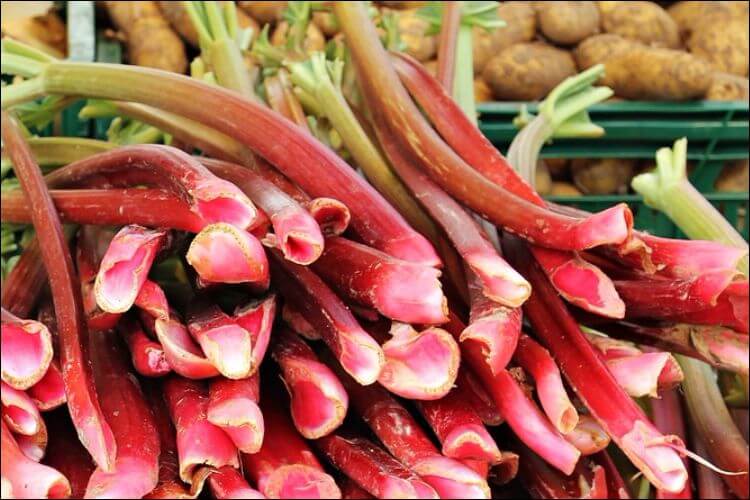
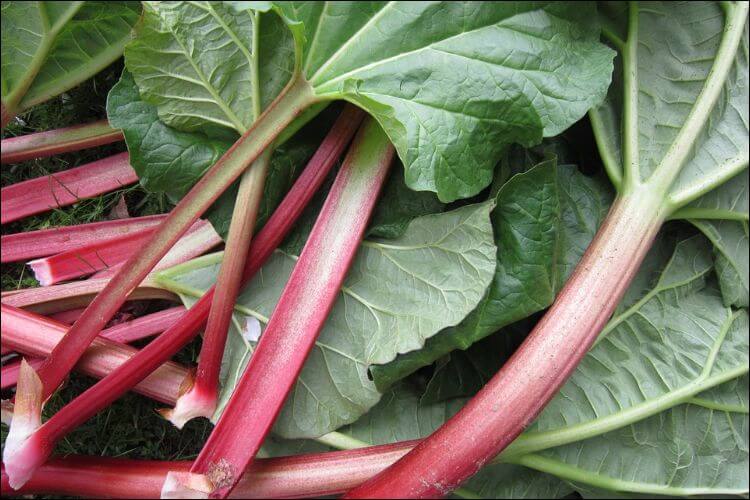
Rhubarb is a long-lived perennial grown for its tart leaf stalks. Give it a permanent, well-drained bed, allow young crowns to establish before harvesting, and leave plenty of foliage to rebuild the plant’s reserves. The leaves are not edible; remove and discard them when preparing stalks.
Choose a suitable climate and variety
Rhubarb performs best in cooler climates with a winter dormant period. Long, hot summers can reduce performance, so a hardiness-zone number alone is not enough to predict success. Ask locally about varieties and whether rhubarb is grown as a perennial or managed differently in your region.
Stalk color varies by cultivar. Green stalks can be mature and usable; waiting for every variety to become deep red can be misleading. Choose a named variety if color is important for the recipes you have in mind.
Start with healthy crowns or plants
A nursery crown or a healthy division provides a more predictable start than seed. Obtain divisions with permission from a known healthy planting. Avoid soft or diseased material, and keep roots from drying out before planting. Seed is possible, but seedlings take time and may vary from the parent.
Prepare a permanent bed
Choose a sunny site with enough room for the mature foliage and access for harvesting. Remove persistent weeds before planting. Work suitable compost into the growing area where needed rather than digging several feet down or filling a small hole with concentrated amendments.
Assess drainage across the site, especially after rain. A raised bed can help in some locations, but it needs an appropriate design and drainage outlet. Soil testing is a better basis for pH and fertilizer decisions than a universal recipe of manure, compost tea and high-nitrogen feed.
Plant at the right depth and spacing
Follow the nursery’s instructions for a dormant crown, keeping its buds at the recommended shallow depth below the finished surface. Plant an actively growing potted specimen at its established level. Leave roughly three to four feet between vigorous plants where appropriate to the variety and local guidance; do not crowd crowns merely to fill the bed immediately.
Water after planting and check moisture during establishment. Keep mulch away from the crown so it does not hold persistent wetness against emerging growth.
Water, feed and weed through the season
Check the root zone during dry weather and water deeply enough to reach roots without saturating the bed. Surface dryness alone does not describe moisture deeper down. Young plants and hot spells require closer attention.
Keep weeds under control by careful hand removal or other appropriate methods. “Natural” herbicides are not automatically harmless to rhubarb or soil. Use fertilizer according to soil-test results and regional guidance, avoiding contact between concentrated products and the crown. Do not assume fresh manure is a suitable mulch around food crops.
Remove flower stalks and investigate problems
Cut out flower stalks if you want the plant to concentrate on vegetative growth. Flowering does not make otherwise healthy leaf stalks poisonous. Keep healthy leaves after harvest rather than stripping the plant bare.
Soft crowns, poor growth or damaged stalks deserve diagnosis. Check drainage and plant condition before applying pesticides. If an insect is present, identify it with local extension help; not every beetle is the same pest and not every problem needs a spray.
Harvest lightly at first
Do not harvest during the first growing season after planting. Depending on vigor and local advice, a small second-year harvest may be possible; allow weak or recently divided plants longer. Established plants can support a longer spring harvest, but the calendar varies by climate.
Grip a suitable stalk near its base and pull gently with a twisting motion, or use the harvesting method recommended locally. Avoid damaging the crown. Take a limited share at each picking and retain substantial healthy foliage. Leaving only two stalks is not a sound general rule.
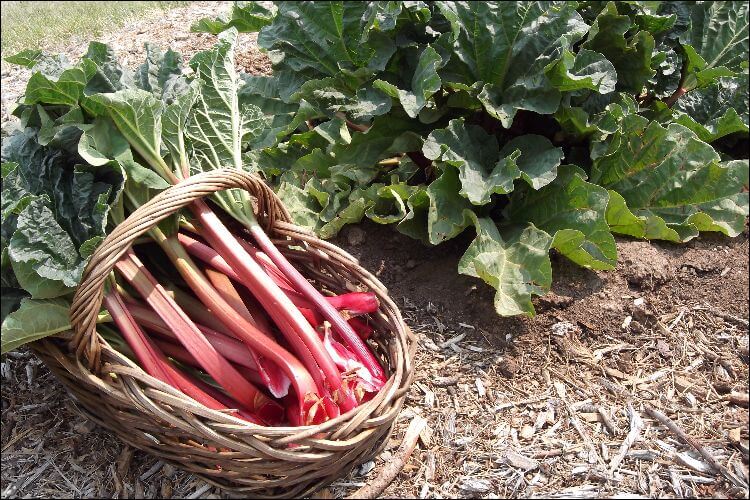
In Minnesota, UMN Extension recommends ending the harvest by late June so plants can replenish reserves. Use the seasonal guidance for your area and stop earlier if stalks become thin or plants are stressed. An eight-week harvest is not permission to keep picking all summer everywhere.
Prepare and store stalks safely
Remove the leaf blades and use only sound stalks. Keep rhubarb and discarded leaves away from livestock and pets; do not assume goats will avoid it because it tastes tart. Refrigerate harvested stalks and use them promptly, or freeze prepared pieces using a reliable food-preservation method.
Purdue Extension’s rhubarb guidance also explains seasonal harvest and retaining leaves after picking. Seek local advice about frost-damaged or otherwise abnormal growth rather than treating every damaged stalk as usable.
Use the harvest in the kitchen
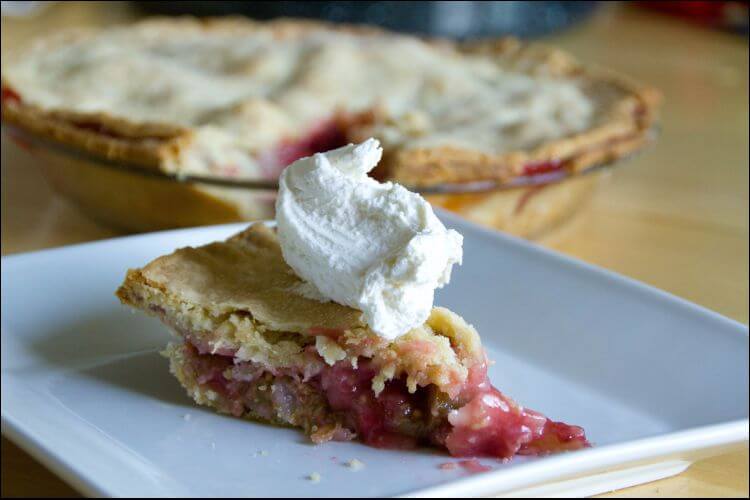
Sound stalks suit pies, crumbles, cooked sauces and ice cream toppings. Their tartness pairs well with strawberries, but adjust sugar using a tested recipe rather than assuming every variety tastes identical. For preserving or canning, use a validated recipe and process.
After the harvest season, keep the bed watered as needed, remove weeds and let healthy foliage continue growing. Divide an overcrowded or declining planting at an appropriate dormant-season time, retaining healthy material. Good aftercare helps make rhubarb a repeat crop rather than a one-season harvest.