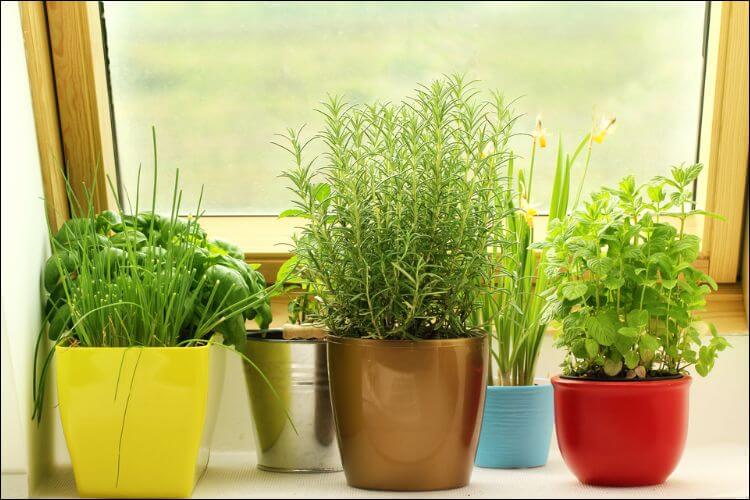
For herbs in pots, start with drainage holes, a suitable potting mix and enough light for the herbs you choose. Water according to the plant and the conditions, not a fixed daily schedule. Separate herbs with different moisture needs, and give them room to grow before expecting regular harvests.
Choose culinary herbs you will use
Start with two or three familiar herbs rather than a crowded collection. Basil suits warm-season cooking, parsley provides leafy harvests, and thyme or rosemary offers woody perennial growth where conditions suit them. Mint is useful in its own container because it spreads vigorously.
Buy clearly labeled culinary plants. A list of plants called “herbs” is not a list of safe ingredients: ornamental or medicinal plants such as arnica, tansy and soapwort do not belong in a beginner’s kitchen-herb selection.
Pick a container for the mature plant
Choose a pot with usable root space and drainage openings. Plastic, glazed ceramic, terracotta and other suitable materials can all work. Terracotta often dries faster; plastic can hold moisture longer. Weight matters if you must move the pot indoors, especially after watering.
A small nursery pot is usually temporary housing. Check the expected size of the variety, and allow space for the root ball to expand. A large rosemary plant needs a different container from a newly rooted thyme cutting. Keep the pot stable in wind and use a saucer indoors without leaving the roots standing in collected water.

Fill with growing medium, not packing material
Use a well-draining container mix suitable for edible plants. Garden soil can become dense in pots. Do not fill the bottom with corks, foam pieces or gravel to restrict roots or “improve drainage.” Maryland Extension’s container guide explains that gravel and similar layers take up root space and can worsen drainage.
Check whether the mix already contains fertilizer before adding more. Leave enough space below the rim to water without washing mix out, but do not bury the plant’s crown deeper than intended. Water after planting and confirm that excess water can escape.
Provide useful light indoors and outdoors
Most common culinary herbs need a sunny location, though their tolerances differ. Observe the actual sun reaching a balcony or patio, including shade from railings. Gradually acclimate indoor-grown plants to strong outdoor sun rather than moving them abruptly into an exposed position.
Indoors, a bright-looking room may still provide insufficient light. A sunny window can work seasonally, but winter growth often needs a suitable grow light. Follow the light manufacturer’s placement instructions and allow a daily dark period. Maryland’s indoor-herb advice discusses supplemental lighting and the challenges of winter growing.
Match watering to the herb
Feel the growing medium and notice the pot’s weight before watering. When needed, water the root zone thoroughly and let excess drain. Hot, windy outdoor conditions can dry a pot much faster than a cool windowsill. Wilting is not proof of dryness: check the mix because wet, damaged roots can also produce a wilted plant.
Group pots with similar care requirements for convenience. In a shared planter, match moisture needs and mature size. Pinching stems will not solve overcrowded roots, so divide or repot plants when the container becomes too full.
Basil
Basil needs warmth and good light, with consistent moisture but no waterlogging. Wait for suitable outdoor temperatures and protect it from cold. Harvest stem tips above a pair of leaves once the plant is established, leaving enough foliage for recovery. A properly managed self-watering pot can work; it is not inherently unsuitable for basil.
Rosemary
Give rosemary strong light and a freely draining mix. Let the mix dry somewhat between waterings without leaving the root ball bone dry for long periods. Winter survival outdoors depends on the cultivar and climate; an indoor plant also needs light, airflow and careful watering.
Thyme
Thyme suits a sunny position and good drainage. Clip small leafy portions instead of cutting repeatedly into bare old wood. It can share space with herbs of similar needs, but allow the cultivar’s spreading growth enough room.
Parsley and mint
These generally need more consistent moisture than thyme. Harvest parsley’s outer stems while preserving the central growing point. Keep mint in a separate pot when possible, and inspect growth escaping through drainage openings if the container stands on soil.
Feed lightly and harvest gradually
Follow the fertilizer label for container-grown edible plants, accounting for any nutrients already in the mix. More fertilizer is not a substitute for light or drainage. The University of Minnesota herb guide recommends light feeding and discusses propagation and harvesting.
Take modest amounts from established plants using clean tools. Leave sufficient healthy leaves and time for regrowth. A small plant cannot provide unlimited harvests just because frequent clipping encourages branching. For larger kitchen needs, grow additional plants or sow another batch of annual herbs.
Plan for seasonal changes
Move tender pots before damaging cold arrives, checking them for pests. Hardy perennial herbs in containers may need root protection even when the same species survives in garden soil. Annual herbs eventually need replacing, and indoor winter growth may be slow.
Check regularly for aphids, mites and other problems rather than assuming pots prevent pests. Use only treatments labeled for the edible plant and follow harvest restrictions. A simple record of light, watering and harvest helps you adjust care without repeatedly changing everything at once.
Image source: depositphotos.com.