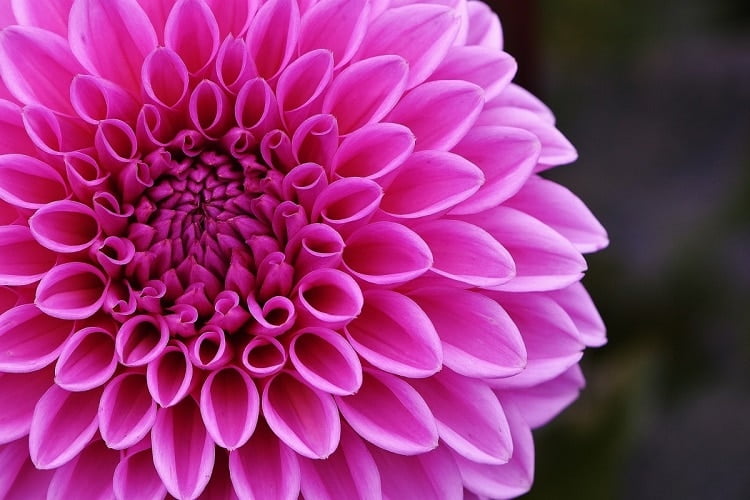
Dahlias bring a wide range of flower shapes and colors to sunny borders and cutting gardens. In climates with winter frosts, their usual display runs through summer and autumn until frost damages the foliage. They do not bloom through most of the year in an ordinary temperate garden.

Choose a dahlia for the space you have
Check the cultivar’s mature height and spread before buying. Compact bedding types suit containers and the front of a border; tall varieties need more space and support. Flower size and plant height are separate features, so do not assume every large flower comes on the tallest plant.
White, yellow, orange, pink, red and purple flowers, including bicolors, offer plenty of choices. Use the named cultivar and a reliable nursery description rather than an unusually colored sales photograph to decide what to buy. A local dahlia society can help identify varieties that perform well in your climate.
Buy firm, sound tubers with an intact neck and crown, or choose a healthy potted plant. Dahlias can also be raised from seed, although seedlings need not match a named parent. A tuber division must include a viable growing eye associated with the crown; a detached storage root alone is not enough.
Prepare a sunny, well-drained site
Choose a sheltered location with about six or more hours of sun. In very hot climates, some afternoon protection may help; avoid moving the plants into deep shade. Leave room to reach the stems for tying, cutting and deadheading.
Improve the bed with finished compost where needed. Do not try to fix a persistently waterlogged planting hole by dropping a little sand into it. If water collects at the site, improve the broader drainage or choose a raised bed or container. A soil test can guide fertilizer and pH adjustments instead of adding products by guesswork.
Plant when the soil has warmed
Use local frost and soil conditions rather than a universal May planting date. The American Dahlia Society’s planting guide recommends warm soil with little frost risk and describes starting plants indoors about a month earlier for a head start.
- Set out the spacing on the bed before digging. Around two feet is a common starting point, with more room for large cultivars; follow the supplier’s mature-size guidance.
- Install the support for a tall variety while you can still see where the tuber will sit.
- Set the tuber with the eye uppermost in a hole several inches deep, following the supplier’s instructions for that stock and soil. Do not break its narrow neck.
- For an established potted plant, preserve its existing planting level rather than burying the leafy crown deeply.
- Label the cultivar and planting date. This makes comparing performance and identifying stored tubers much easier.
Acclimatize indoor-grown plants gradually before planting out. Dormant tubers use little water and can rot in wet soil; leafy transplants have different needs and should be watered in. Avoid a blanket instruction either to soak every newly planted tuber or never water until shoots appear.
Water and feed according to growth
Once plants are actively growing, check moisture below the surface and water the root zone thoroughly when needed. Rainfall, soil, heat and container size determine frequency. A fixed twice-weekly schedule can be too much in wet weather and too little for a pot in summer.
The American Dahlia Society’s watering guidance explains the greater demand of large, leafy plants. Check containers especially often and make sure excess water can drain. Keep mulch away from stems.
Base feeding on soil conditions and the fertilizer label. Excess nitrogen can encourage leaves at the expense of flowers. Soluble fertilizer is not inherently unsuitable; a measured liquid feed can be useful for container plants. Avoid applying multiple feeds simply because growth seems slow.
Support stems and keep flowers coming

Tie growing stems loosely to their support so the ties do not cut into them. Check ties after wind or heavy rain. Compact bedding types may need little support, but tall stems with heavy blooms can bend or break.
Remove faded flowers regularly, cutting back to a leaf joint. If you want a bushier plant, pinching the growing tip is an option; it is separate from removing spent blooms. The RHS dahlia guide explains these training methods and distinguishes rounded buds from the more pointed spent flower heads.
Inspect damage before treating it
Look for slugs around young shoots, aphids on soft growth and mites during hot, dry conditions. One rinse is not a guaranteed cure, and rubbing alcohol is not a routine garden spray. Identify the pest, remove small infestations where practical, and use any plant-protection product only as labeled.
Powdery foliage, wilting and rotting stems have different causes. Improve spacing or watering where appropriate, but do not assume every problem requires fungicide or removal of the whole plant. Photograph uncertain symptoms and ask local extension staff for help before treating.
Store tubers where winter freezes the ground
Where tubers cannot reliably overwinter outdoors, lift them carefully after frost damages the foliage and before the ground freezes. Dig around the clump rather than pulling on the stems. Remove loose soil, label the stock and let surface moisture dry before packing.
Use a cool, frost-free storage location and a suitable packing medium; avoid sealed, wet conditions and prolonged drying that severely shrivels the tubers. Inspect periodically and remove rotting material. The University of Minnesota’s tender-bulb storage guidance covers careful lifting and winter checks.
In mild climates, well-drained ground may allow tubers to stay outside with protection, but unusually cold or wet weather can still cause losses. Keep a note of which cultivars flowered well so next season’s garden builds on what worked.