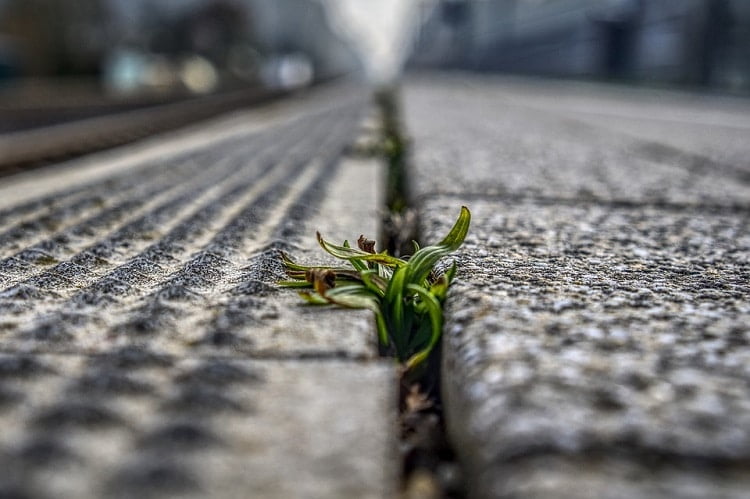
To control weeds without herbicides, identify the plant, remove young growth before it reproduces and reduce the opportunities for it to return. Hand removal, shallow cultivation, suitable mulch and competitive planting can work together. Established perennial weeds usually need repeated attention because roots, rhizomes or tubers can survive the first cleanup.
“Natural” is not a safety rating. Salt, concentrated vinegar, essential oils and household mixtures can damage desirable plants or expose people and animals. A useful weed-control plan starts with the weed and the site, not a kitchen recipe.
Decide what actually needs removing
A weed is a plant growing where it is unwanted. You may choose to tolerate some low-growing plants in an informal lawn while removing them from a seedbed. Check local invasive or noxious-weed guidance where identification is uncertain. Wear suitable gloves and avoid handling unfamiliar plants with irritating sap or sharp parts.
Do not turn an identification guess into a food or medicinal recommendation. This article does not recommend eating dandelions, nettles or clover from an unknown site or using them to treat a health condition. Plant identity and potential contamination require separate consideration.
Pull or dig while the patch is manageable
Small annual weeds are usually easier to remove before flowering. Moist, workable soil can make pulling easier, but avoid churning saturated beds. Use a hand tool to loosen the root area rather than snapping off every stem at ground level.
For perennial weeds, find out which underground structures permit regrowth. Removing visible leaves may only be the first pass. Mark persistent patches and inspect them again. The UC IPM landscape weed guide emphasizes identification, prevention and follow-up rather than a single universal treatment.
Hoe shallowly where plants are small
Shallow cultivation can remove seedlings between rows before roots become extensive. Work carefully around crop roots and irrigation lines. Repeated deep digging is not automatically better; it can disturb roots and bring more buried seed into conditions where it germinates.
Avoid indiscriminate rotary tilling through a perennial infestation. Some weeds spread when underground pieces are moved through the bed. For nutsedge specifically, use the separate nutsedge control guide rather than assuming ordinary seedling-weeding advice will eradicate its tubers.
Use appropriate mulch and keep checking
Remove existing problem growth before applying a mulch suited to the planting. Keep mulch clear of trunks and crowns, and avoid adding fresh layers without checking the existing depth. Mulch can suppress many seedlings; it does not permanently prevent all weeds.
Do not bury old carpet or shower-curtain pieces in a bed as a weed barrier. Use materials intended for the setting and consider how they will age or be removed. Landscape fabric has maintenance tradeoffs, especially in beds that will be replanted. Weeds can establish in debris above it and emerge at openings.
Reduce bare ground and new introductions
Where appropriate, establish desirable plants at their recommended spacing so the intended planting occupies the site. Do not overcrowd plants or introduce an aggressive ground cover merely to hide weeds. In lawns, select locally suitable turf care rather than mowing excessively short to remove weed tops.
Inspect new plants, soil and compost for obvious weed material. Clean soil from tools before moving between infested and clean areas. Handle mature seedheads and persistent underground pieces so they are not simply scattered back across the garden. Ask local extension about disposal for an invasive species.
Be cautious with shortcuts
Vinegar-based products act mainly on contacted foliage; browned leaves do not prove a perennial root system is dead. Oregon State explains the limitations and handling risks of horticultural vinegar. If you choose an herbicide, use a properly labeled product as directed rather than improvising vinegar, salt, alcohol or detergent mixtures.
Boiling water can scald and may leave underground growing points alive; hard paving does not guarantee it stays away from nearby roots. A crack-weeding tool is easier to control in many small paved areas. Corn gluten is not a cure for established weeds or a universally safe companion to desired seed germination. Goats or chickens also require appropriate care and can damage wanted plants; acquiring animals is not a simple replacement for garden maintenance.
Plan the second pass
After the first cleanup, note which weeds return and where. Revisit small patches before they regain size or set seed. If a large perennial infestation keeps returning, get a species-specific plan before investing in more mulch or another round of soil disturbance.