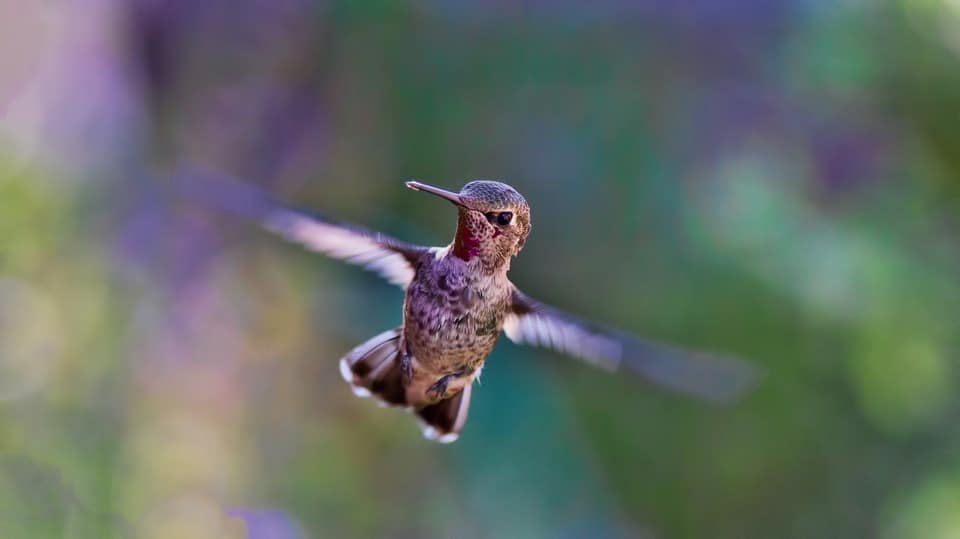
To attract hummingbirds, combine suitable flowering plants with clean nectar feeders, insect habitat and a quiet place to perch. Start with the species and migration season in your area: a well-planned yard can support visiting birds, but cannot guarantee daily sightings.
Plant for your region and a long bloom season
Choose locally appropriate native plants that flower at different times. Depending on your location, suitable species may include bee balms, native sages, penstemons or coral honeysuckle. Check the exact species and its light, moisture and space requirements before planting; “honeysuckle” alone is not a sufficient shopping label.

Image Source: Pixabay
Audubon’s regional nectar plant lists are a useful starting point. Group compatible plants where you can see them from a comfortable seat, and leave room for mature growth. A small container planting can be a manageable first project.
Offer plain nectar and keep the feeder clean
Mix one part white granulated sugar with four parts water. Let the mixture cool before filling the feeder. Do not add red dye, honey or artificial sweeteners. Choose a feeder that comes apart easily so all feeding ports can be cleaned.
Cornell Lab’s feeding guidance recommends replacing nectar within two or three days and daily in very hot weather. Clean the feeder when changing nectar, and sooner if it becomes cloudy or dirty. Follow its cleaning instructions and rinse thoroughly. Put out only as much as the birds are likely to use between cleanings.
Include insects, shelter and bathing opportunities
Hummingbirds also eat small insects and spiders. Avoid routine broad-spectrum spraying in their feeding habitat. Preserve suitable shrubs and trees for cover and perches rather than trying to create an entirely insect-free garden.
A gentle mister or drip source can provide bathing opportunities; keep the equipment and water clean and avoid leaving stagnant puddles. Audubon’s habitat guide also suggests spacing multiple feeders out of sight of one another to reduce one bird’s ability to guard them all.
Watch patiently and adjust one thing at a time
Keep pets away from feeding areas and avoid repeatedly approaching the birds for a photograph. Record flowering dates and visits for a few weeks. If a feeder is quiet, check cleanliness and local sightings before buying more equipment. Migration, nearby flowers and individual territories can change how often hummingbirds visit.