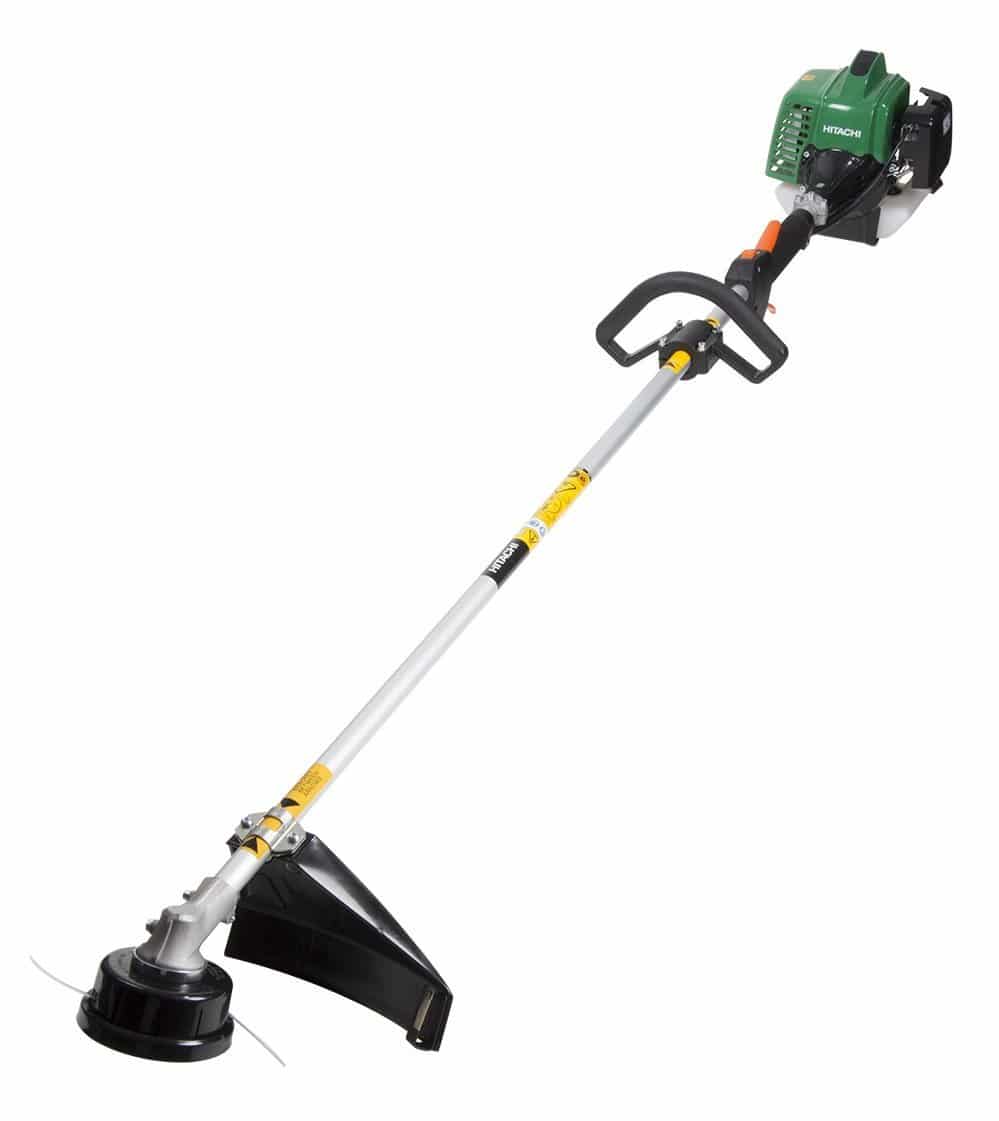
The older Hitachi trimmer described in this review appears to be the CG23ECP(SL), also written CG23ECPSL. It is a gasoline string trimmer, not a battery tool. Check the model plate before applying the specifications below or ordering service parts.
What the model documentation establishes
The Hitachi owner’s manual lists a 22.5cc engine, a 0.48-liter fuel tank and a dry weight of 4.7 kilograms, or 10.4 pounds. Dry weight is not the same as the weight of a fueled machine ready for use.
This is a two-stroke tool that requires the correct fuel-and-oil mixture. Use the instructions for your exact machine and the specified oil. The manual discusses mixture requirements that depend on the oil and applicable conditions; do not choose a ratio from a generic trimmer article. Do not improvise an extra-oil “break-in” mixture.
The manual also requires the appropriate guard and warns against metal or plastic blade attachments on the loop-handle configuration. A string head must not be converted into a brush-cutting setup merely because a replacement attachment appears to fit.
Why consider a gasoline trimmer?
A gasoline model may suit an owner who already maintains small engines and wants to refuel during a long job. That convenience comes with fuel storage, starting procedures, noise and maintenance. It is not proof that any gasoline machine will outperform any cordless one.
For short weekly touch-ups, compare the preparation and maintenance involved with the amount of actual cutting you do. For longer boundaries, also consider working weight, balance and vibration. A specification sheet cannot tell you whether the machine will remain comfortable for your own task.
Fuel handling needs particular care
Follow the manual when selecting gasoline and two-stroke oil, preparing a mixture in an approved container and storing fuel. Do not substitute automotive engine oil or guess quantities. If the instructions on the machine, its manual and the oil container appear inconsistent, resolve that with the manufacturer’s service support before running it.
Stop the engine and allow it to cool before refueling. Keep fuel handling outdoors, away from ignition sources. Do not run the engine in a garage or other enclosed area. An engine that runs poorly after questionable fueling needs diagnosis; adding more oil at random is not a repair.
Handling, starting and service
Use both hands and the specified operating position. Do not turn the entire running machine upside down to imitate a purpose-built edger. Keep the guard fitted, clear the work area of loose debris and use the protective equipment required by the manual.
Starting reliability depends on condition and correct operation. This review cannot substantiate a promise that the engine always starts easily. On a used unit, inspect for damaged controls, leakage, missing guards and worn head components. A cold-start demonstration and a service history are more informative than an unsupported testimonial.
Check the documented service schedule for the air filter, spark plug and other maintenance points. Persistent stalling, abnormal vibration or a head that behaves incorrectly warrants inspection rather than continued use. Disconnect the spark-plug lead as instructed before work that could expose you to unexpected starting.
Parts and purchase decision
Metabo HPT’s parts support is a starting point for identifying legacy Hitachi components. The existence of a support page does not guarantee stock for every old model. Confirm the exact part number and availability before buying a machine with missing components.
A complete, serviceable example may be reasonable for someone comfortable with gasoline-tool upkeep. A bargain with uncertain fuel history, missing safety parts or unavailable replacements can cost more to put right. Treat this as an ownership assessment based on documentation, not a hands-on performance ranking.
For a broader comparison of power sources and yard requirements, see our string-trimmer buying guide.