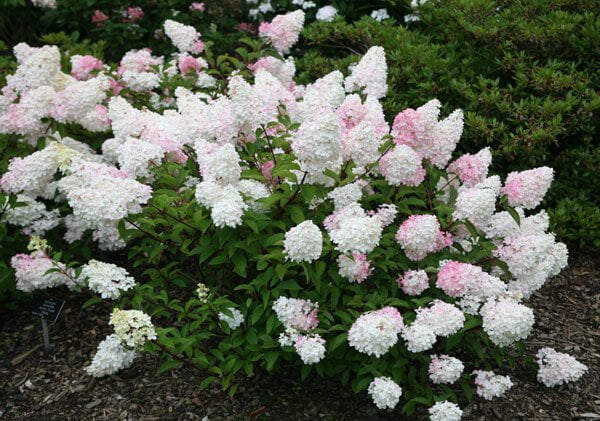
Hydrangea paniculata, or panicle hydrangea, is a flowering shrub that blooms on the current season’s growth. Choose a cultivar that fits your climate and available space, then concentrate on drainage, establishment watering and restrained pruning. A compact selection and a large shrub do not need the same spacing or maintenance.
1. Confirm the plant and its mature size
Read the botanical name on the nursery label: white flowers alone do not identify a panicle hydrangea. Note the cultivar, mature height and spread, and recommended hardiness range. Keep that label with your garden notes so future pruning decisions refer to the plant you actually own.
2. Choose a suitable position
Look for sun to partial shade and well-drained soil. In hot locations, some afternoon shade can help. Leave room for the mature canopy beside paths, windows and neighboring shrubs; do not use a universal ten-foot spacing for every cultivar. The NC State plant profile describes the species and its growing conditions.
3. Check the soil before planting
Check drainage after rain rather than assuming that a fertile-looking bed is suitable. A persistently waterlogged planting spot needs a different location or a drainage solution. Use a soil test to guide amendments and fertilizer. Avoid making a small pocket of rich manure or peat surrounded by poorly draining native soil.
4. Plant at the existing root-ball depth
Dig a hole wider than the root ball, keeping the plant at the depth at which it grew in its container. Gently loosen circling roots, backfill, and water to settle the soil. Do not pile soil against the stems. Plant when you can monitor moisture afterward rather than just before a long absence or a heatwave.
5. Water according to the root zone
Check the original root ball as well as the surrounding soil during establishment. Water slowly when moisture is needed, allowing it to penetrate rather than run away. Rainfall, soil texture, temperature and plant size determine the interval; “twenty minutes every three days” cannot suit every garden. Container-grown shrubs generally need closer monitoring than established shrubs in beds.
6. Mulch and feed thoughtfully
Spread an organic mulch over the root area while leaving space around the stems. Replenish it as it breaks down without creating an ever-deeper mound. Do not add repeated fertilizer simply to force larger flowers. Follow soil-test advice and the product label; poor drainage or drought will not be fixed by extra feeding.
7. Prune at the right time
Panicle hydrangeas flower on new wood. University of Minnesota Extension places pruning in late winter or early spring. Remove dead, damaged and crossing branches and make modest size corrections while retaining a sound framework. Routine cutting to ground level is unnecessary.
University of Maryland Extension advises removing as little wood as necessary. Choose a better-sized cultivar if severe annual reduction is needed to keep a shrub out of a walkway. Dead flower heads can remain for winter interest and be removed during seasonal pruning.
8. Monitor through winter and the following spring
Maintain root-zone mulch rather than burying the entire bush. Check newly planted shrubs during dry spells when the ground is workable. Container roots face different winter exposure from roots in the ground, so obtain local overwintering advice for potted plants. In spring, record growth and flowering before changing several care practices at once.