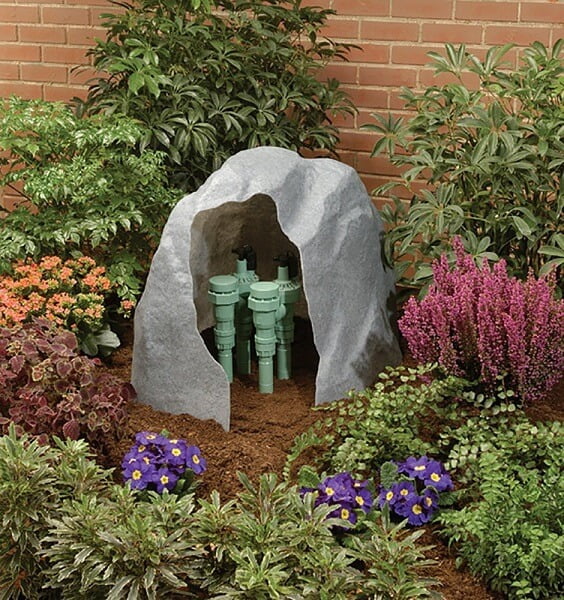
A decorative cover can make exposed irrigation valves less noticeable, but it must not interfere with operation, inspection or backflow protection. Identify the equipment before choosing how to conceal it: sprinkler heads, inline control valves and above-ground anti-siphon devices have different requirements.
Know what you are covering
Sprinkler heads need room to rise, rotate and distribute water. Do not place rocks, planters or covers over their spray paths. Install pop-up heads at the height specified by the manufacturer rather than burying them simply to hide them.
Rain Bird distinguishes below-ground inline valves from above-ground anti-siphon valves. An approved valve box may be appropriate for an inline valve. That does not mean an anti-siphon device can be lowered into the same box.
Preserve backflow-device requirements
For example, Rain Bird’s anti-siphon valve instructions require the covered models to be installed at least six inches above the highest downstream sprinkler. That is a model-specific instruction, not a universal height for every backflow assembly. Follow the exact device manual and local water-provider requirements.
Do not lower, bury, seal or modify a backflow device to make a decorative cover fit. Keep required air openings, discharge space and test access unobstructed. If you cannot identify the assembly or its clearance requirements, ask a qualified irrigation professional or the water provider before enclosing it.
Choosing a faux-rock cover
A hollow faux rock can suit some above-ground equipment where the equipment manufacturer allows it. Measure the entire assembly, including pipework, handles and the space needed for service. Exterior dimensions alone do not show the usable space inside a tapered cover, and a claim that a cover holds “four valves” does not establish a fit for your installation.
Check the cover’s stated outdoor-use limits, ventilation, anchoring method and load rating. Do not use a decorative shell as a seat or stepping stone unless explicitly rated for that purpose. It should lift off readily for inspection without pulling on pipes or wiring.
Make access part of the design
Choose a finish that blends with nearby planting and leave a clear route to the valves. Avoid planting roots or placing heavy objects where they will obstruct maintenance. A screen set away from the equipment may be another option if all operating clearances remain open.
After installation, confirm that the system operates normally and that the cover does not obstruct moving parts or hide a leak. Decorative concealment does not replace maintenance, required testing or winterization. The best arrangement makes the equipment less prominent while keeping it easy to inspect and service.