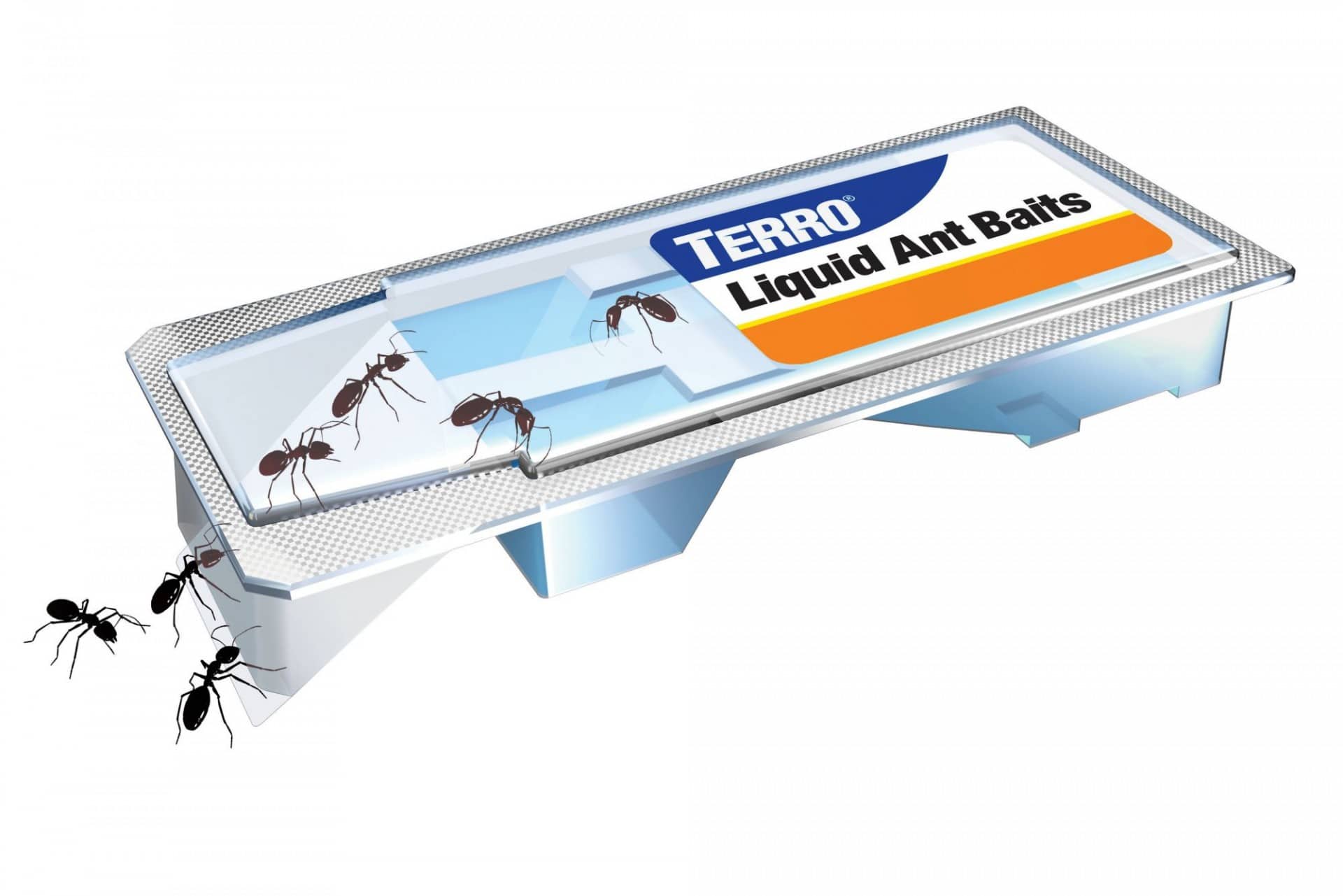
Most products sold as ant traps are actually bait stations: ants feed and leave, carrying a slow-acting insecticide back toward the colony. The container is not meant to imprison every ant. A glue trap catches individual insects, but that is a different tool and does not deliver bait to a hidden nest.
Successful baiting depends on the ant species, its current food preferences, the formulation and the location. A busy station is not necessarily failing, and a station with no visitors is not necessarily solving the problem. Watch what the ants are doing before changing the treatment.
What kinds of ant bait are available?
- Prefilled stations: a packaged liquid, gel or solid bait with an opening for ants. Read the label to find out where it may be used and whether it can be refilled; do not assume it can.
- Gel bait: a formulation dispensed into permitted placements. An exposed gel spot needs protection from people, pets and food-contact surfaces according to the label.
- Refillable liquid systems: a compatible dispenser and labeled refill used together. They require checking for leaks, evaporation and correct placement.
- Granular baits: food particles containing an insecticide, used only where the particular label permits. They are not interchangeable with contact-insecticide lawn granules.
Choose the permitted application method before comparing package size or price. A product intended for an outdoor mound treatment is not automatically suitable for a kitchen cupboard. Similarly, a small indoor station may not be intended to withstand rain or irrigation.
Identify the ants and their route
Look for workers travelling between an entry gap and a food or water source. Record where you see them, their approximate size and whether they emerge from wood or a wall opening. A local extension service or pest professional can help with identification; color alone is not enough.
The University of Maryland’s household-ant guidance distinguishes ordinary foraging nuisances from problems such as carpenter ants and difficult-to-control pharaoh ants. Repellent treatments can cause pharaoh-ant colonies to split, so a persistent unidentified problem is a reason to seek advice rather than add more spray.
Place bait where ants can find it
Follow the product’s placement directions near active routes, while keeping it inaccessible to children and animals. Check whether indoor or outdoor use is permitted. Do not put every kind of bait on top of a mound, beside a drain or on a wet surface: the right location depends on the formulation and label.
Leave a clear route for ants to feed at the selected station. Keep household cleaners and insecticide sprays off the bait and the immediate feeding route. Continue cleaning other food spills and keeping food stored securely. The distinction is between removing competing food and contaminating the treatment you want ants to accept.
UC IPM recommends monitoring bait condition and ant activity. A station can dry out or become unattractive. Check it as the instructions require, and replace or refill only in the permitted way. There is no universal six-month shelf life or temperature threshold that applies to every ant bait.
What should happen after placement?
You may initially notice more ants at a bait they find attractive. That is a feeding response, not proof that the entire colony will be eliminated. Give the labeled treatment time to work while watching the longer-term trend in activity. Colony control can take weeks, and multiple nests or changing food preferences can complicate it.
If ants ignore the bait, inspect the location and condition first. Is it on their actual route? Has it dried or become contaminated? Are they using a different food source? If a suitable fresh product remains unattractive, a different labeled food formulation may be needed. Do not increase the insecticide strength or mix extra ingredients into a commercial bait.
The University of Minnesota explains common reasons baiting fails, including competing food, multiple colonies and changes in dietary needs. A promise that every exposed ant dies in one or two days is not a useful universal test of success.
Why not use homemade borax recipes?
An open plate of sweet or fatty bait may be accessible to a pet or child, and a homemade mixture does not reproduce a labeled commercial formulation simply because both contain borax. Adding more poison when results seem slow can increase exposure without improving colony control. Yeast-and-molasses mixtures also should not be treated as established substitutes for tested ant baits.
Use a product with instructions for the intended pest and setting. Follow its storage and disposal requirements, and retain the packaging. The EPA advises against mixing pesticides or using more than directed. Keep products in their original containers, away from food.
Are enclosed stations safe around pets?
Enclosure can reduce access, but it does not make bait harmless or the container impossible to chew. Choose a placement that the animal cannot reach and inspect for damage. For household planning and what to do after exposure, read the pet-safe ant-control guide.
Reduce the reasons ants return
Seal entry gaps, repair leaks, keep food containers closed and clean feeding areas. Maintain pets’ access to clean drinking water. Note vegetation touching the building and correct conditions that provide access or moisture where practical. Outdoor ants are part of the landscape; management should address an actual household problem rather than promise an ant-free yard.
If activity persists despite correct bait use, get the species and nesting situation checked. Carpenter-ant activity may require investigation of damp or damaged wood, and some colonies occupy inaccessible spaces. Give a professional your observations and the names of treatments already used so the next step is based on evidence.