The best privacy planting is one that fits your climate, mature space and maintenance capacity. Evergreens can screen in winter, while deciduous trees lose much of their visual coverage when leaves fall. The 12 options below are candidates to compare, not universal recommendations. A line of trees is not a security barrier, and a narrow hedge should not be promised to block traffic noise.
Plan the screen before selecting plants
Mark the view you actually want to interrupt: a seating area may need less height than an upstairs window. Measure the available width and note sun, drainage, overhead wires, property boundaries and access. Check local restrictions and underground utilities before digging. Clemson Extension recommends considering mixed screens so one pest or disease is less likely to affect the entire planting. Plan spacing from mature width and the intended pruning regime rather than planting everything three or six feet apart.
1. Green Giant arborvitae
Thuja ‘Green Giant’ can work on a spacious property, but it is easy to underestimate. NC State lists a mature size of about 40–60 feet tall and 12–18 feet wide. It needs suitable drainage and establishment care; disease resistance is not immunity. Avoid buying it for a narrow strip on the assumption that it can remain small without ongoing management. 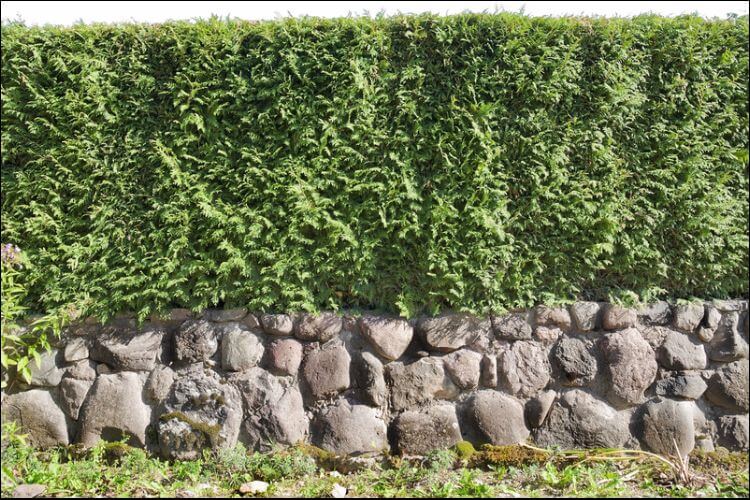
2. Emerald Green arborvitae
Thuja occidentalis ‘Smaragd’, often sold as Emerald Green, has a narrower, upright form that may suit smaller spaces than Green Giant. Check the exact cultivar’s mature dimensions and local performance before choosing spacing. The RHS cultivar profile describes its growing requirements. A small nursery plant still needs water while establishing, and a close formal hedge may need maintenance.
3. American holly
Ilex opaca provides broadleaf evergreen texture and can become a substantial tree. It is a holly, not mistletoe. Match it to a suitable site and allow room for its mature crown instead of applying one tight spacing rule. For berries, select compatible male and female plants where appropriate. Consult the NC State American holly profile; do not treat its fruit as edible decoration.
4. Leyland cypress
Leyland cypress grows quickly but can become too large for a small garden. Clemson lists typical dimensions around 60–70 feet tall and 12–20 feet wide, with larger trees possible. Disease problems and close spacing can undermine the very screen you are trying to create. Consider alternatives locally and avoid choosing it solely for an advertised annual growth rate.
5. A named willow hybrid
“Hybrid willow” is not one standardized tree with one final size. Ask for the botanical identity and cultivar, then verify its suitability with a local extension service. Willows are generally deciduous, so judge winter privacy separately. Their vigorous growth and maintenance needs deserve particular attention near buildings, drainage systems and confined spaces. A named plant with known local performance is more useful than a promise of six feet of growth every year.
6. Douglas-fir
Pseudotsuga menziesii is a large conifer that suits some regional landscapes far better than others. Seed origin and growing conditions matter; do not assume all Douglas-firs tolerate the same heat or drought. Use the NC State profile as a starting point and seek local advice. Reserve it for a site with enough long-term space rather than a narrow boundary strip. 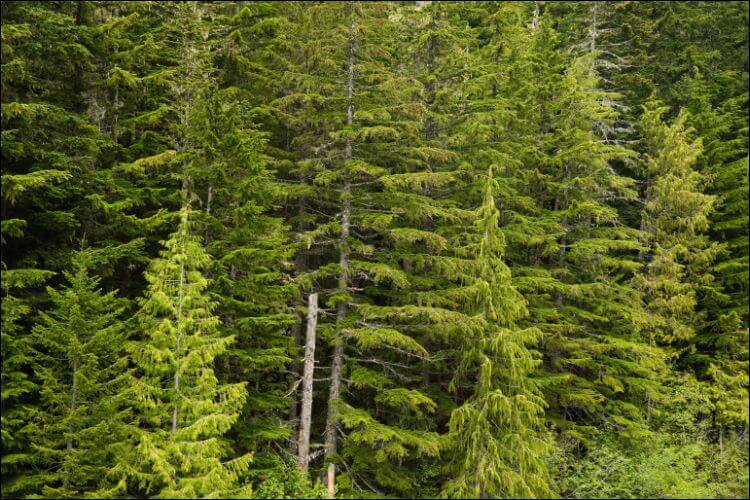
7. Eastern redcedar
Juniperus virginiana is a native North American juniper with a range of forms and useful screening potential on suitable sites. Choose the species or cultivar deliberately, since size and shape vary. Check local disease concerns, especially if growing susceptible apples or related plants nearby. The NC State plant profile covers its site needs and cedar-apple rust concerns. It is not a universal solution for waterlogged soil.
8. Eastern white pine
Pinus strobus has soft-textured needles and becomes a large tree. NC State gives typical dimensions of 50–80 feet tall and 20–40 feet wide. Allow that spread when planning paths and boundaries. A smaller cultivar must be identified by name; a generic “columnar variety” does not guarantee a particular maximum size. Think about the eventual lower-branch coverage as well as height.
9. Concolor or white fir
Abies concolor offers blue-green needles and a dense pyramidal habit. It handles heat and drought better than some other firs, but that comparison does not mean it thrives in any hot, dry location. NC State notes that it is not suited to the southeastern United States and recommends moist, well-drained soil. Check regional performance before using it as a major screen. 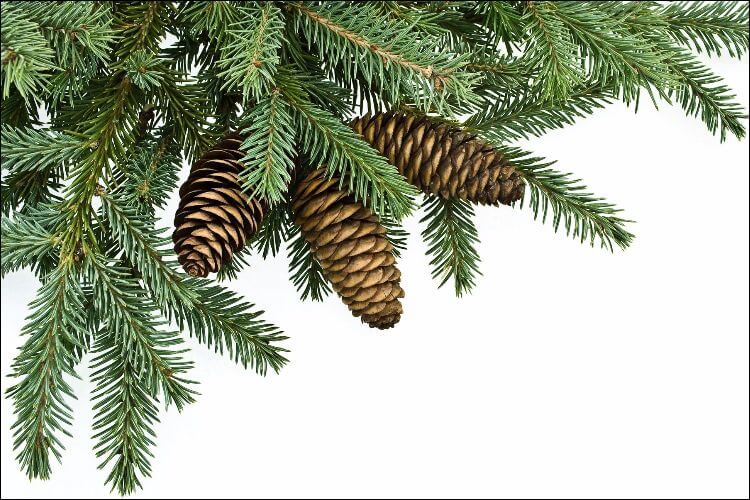
10. Norway spruce
Picea abies can create a substantial evergreen backdrop where climate and space suit it. Its mature form includes hanging branchlets, and standard trees should not be confused with compact cultivars. Read the NC State Norway spruce profile and select the actual cultivar you intend to buy. Leave space for the lower branches if dense screening near ground level is important.
11. Deodar cedar
Cedrus deodara has graceful, drooping growth but needs considerable room. NC State lists approximately 30–50 feet in height and 30–40 feet in width. Poor drainage and cold exposure can be problems. Its broad eventual form makes it more suitable for a generous landscape than a tightly clipped side-yard hedge. Check wildfire guidance where relevant to your location. 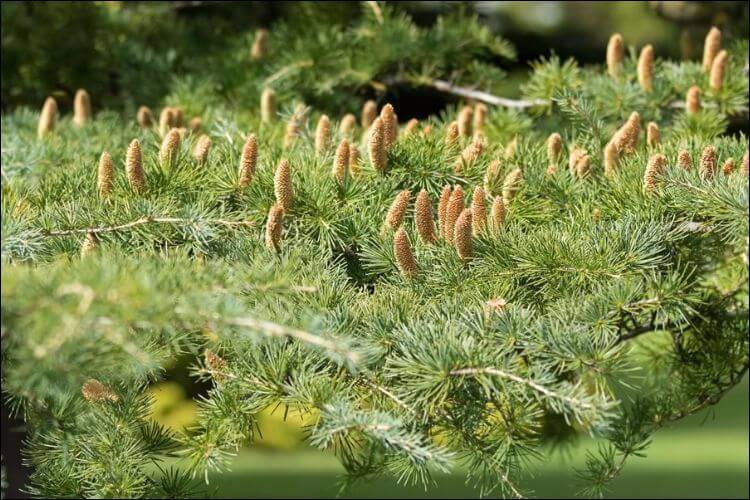
12. Yew
Taxus includes trees and shrubs with very different final dimensions, so choose a named species and cultivar. Some suit formal hedges and tolerate shade, but avoid persistently wet soil. NC State identifies serious poisoning hazards from yew. Consider a different plant where livestock or pets may chew it, and never leave clippings where animals can reach them.
Establish a screen that can last
Plant at the correct depth with the root flare visible, water according to soil moisture and keep mulch away from trunks. A mixed, staggered planting can look more natural where there is enough width, but still needs mature spacing. Leave access for inspection and pruning. For a small patio, a modest shrub or a carefully placed screen may meet the need better than the tallest tree on the list. Reassess the plan before buying a long row of identical plants.
Image source: depositphotos.com