Wedding greenery can shape a bouquet, soften a ceremony backdrop or add texture to reception tables. Start with the areas guests will see most, then choose foliage and arrangements that suit the venue, season and setup time. An all-green design can be beautiful, but it is not automatically cheaper or easier than using flowers.
Ask for a quote that includes foliage quantities, supporting structures, containers, delivery, installation and removal. Large garlands and suspended displays can require considerable labor even when the individual stems seem inexpensive. Agree on acceptable substitutions so a shortage does not force a last-minute redesign.
1. An all-green bouquet
Build the design around contrasts in leaf size, shape and color. One broad-leaved material can provide structure, while a finer texture creates movement. Repeating a few materials usually makes the bouquet easier to plan than buying a little of everything.
Hold a trial bouquet at the intended size before ordering. Check its weight, whether stems scratch your hands or clothing, and how it looks from the front rather than only from above. Finish the handle neatly and keep sharp wire ends concealed.
Identify every plant you use. “Any attractive leaf” is not a safe selection rule: some plants have irritating sap, thorns or unsuitable handling characteristics. Ask the florist about scent and durability if the bouquet will be carried outdoors for a long period.
2. A foliage-led bouquet with a few flowers

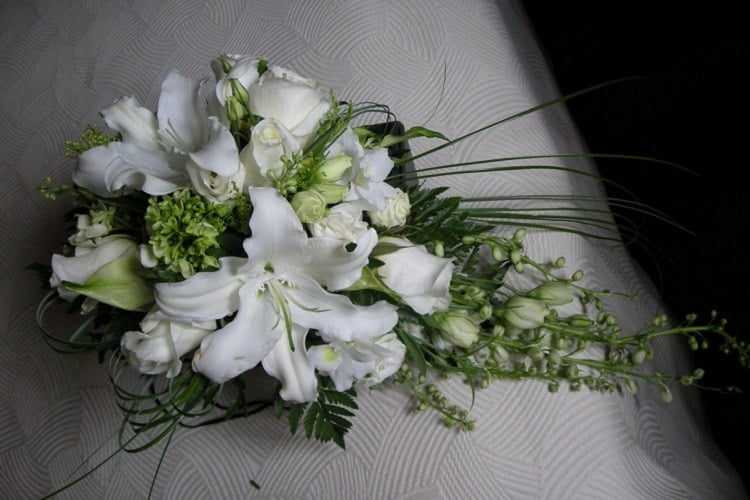
Use greenery as the main shape and add flowers where you want the eye to rest. White, soft pink or a stronger accent color can all work; there is no requirement to keep the palette pale. Choose the combination around your own taste and the colors already present in the setting.
Make one sample arrangement before scaling it up for attendants. Photograph it against clothing or fabric similar to what will be worn. A bouquet that looks balanced on a worktable may hide small flowers once it is carried.
For a flower-focused version, compare the shapes in our spring wedding flower guide, then confirm availability with the supplier for your actual date.
3. A green ceremony arch
Decide whether you want a fully covered arch, a single corner arrangement or a lighter line of foliage. An asymmetric cluster can give a clear focal point without covering the whole frame. Include the couple’s standing position and the photographer’s view in the plan.
Use a purpose-designed structure and have the installer account for foliage, water containers and wind. A branch suspended above people needs an approved support arrangement. Do not hang greenery from a chandelier, lighting bar or venue fixture without explicit venue approval and a suitable installer.
For outdoor ceremonies, agree on a weather limit and an alternative location. Moving a finished arch shortly before guests arrive should be planned, not improvised.
4. Small foliage accents along the aisle
Attach modest bundles to selected aisle-side chairs or use stable containers beside the seating. Repeating the bouquet foliage creates continuity without requiring a dense garland along every row. Check how the decorations look with people seated.
Keep entrances, chair access and walking routes clear. Avoid trailing stems, ribbons or wires at foot level, and do not attach anything that prevents chairs from being moved when needed. Confirm which ties or clips the venue allows so furniture is not damaged.
5. Table greenery that leaves room for dinner
A low runner, small grouped vases or a few potted plants can all work. Test the design with the actual place settings, serving dishes and table numbers. Leave room for guests to see one another and for staff to serve food.
Use watertight containers or protect the surface appropriately. Keep loose foliage out of plates and serving areas. If you want candlelight among greenery, flameless candles simplify the arrangement; real flames need the venue’s approval and safe separation from foliage and other combustible decor.
Potted plants can be reused after the event, but include their containers, watering and transport in the plan. Do not assume a succulent is suitable for every table simply because it tolerates dry conditions.
6. A cake display with a coordinated green theme
Separate the look of the cake table from what actually touches food. Sugar leaves or decorations supplied by the baker can repeat the green palette without using florist stems. Greenery in separate vases around the display offers another option.
Have the baker approve any fresh plant material and its placement. Ornamental foliage, floral wire, preservatives and florist flowers should not be pushed directly into a cake. Colorado State University Extension’s edible-flower guidance emphasizes correct identification and appropriate sourcing; a decorative plant is not edible merely because it looks suitable.
7. A few larger venue accents

Choose a welcome sign, a photo backdrop or another prominent point for a larger greenery arrangement. You do not have to cover every wall to make the theme visible. First look at the venue’s existing plants, architecture and sightlines so the installation works with the space.
Agree on approved fixing points, access equipment and removal arrangements. Keep sprinklers, exit signs, ventilation and emergency routes unobstructed. Leave overhead and heavy installations to people equipped to design and install them appropriately.
Prepare greenery before the event
Test your chosen material under conditions similar to the venue, including time out of water. The RHS conditioning guide recommends clean cutting tools and containers, removing submerged foliage and allowing cut material to take up water in a cool place. Different stems need different treatment, so ask the supplier for specific guidance.
Assign people to transport, setup, watering checks and cleanup. For a DIY wedding, a manageable number of arrangements completed well is more dependable than an elaborate plan with no time to install it.