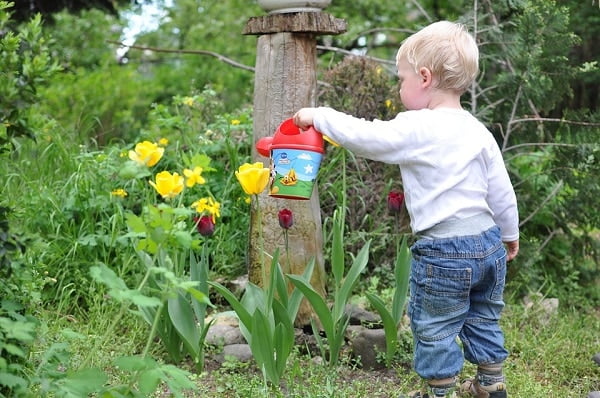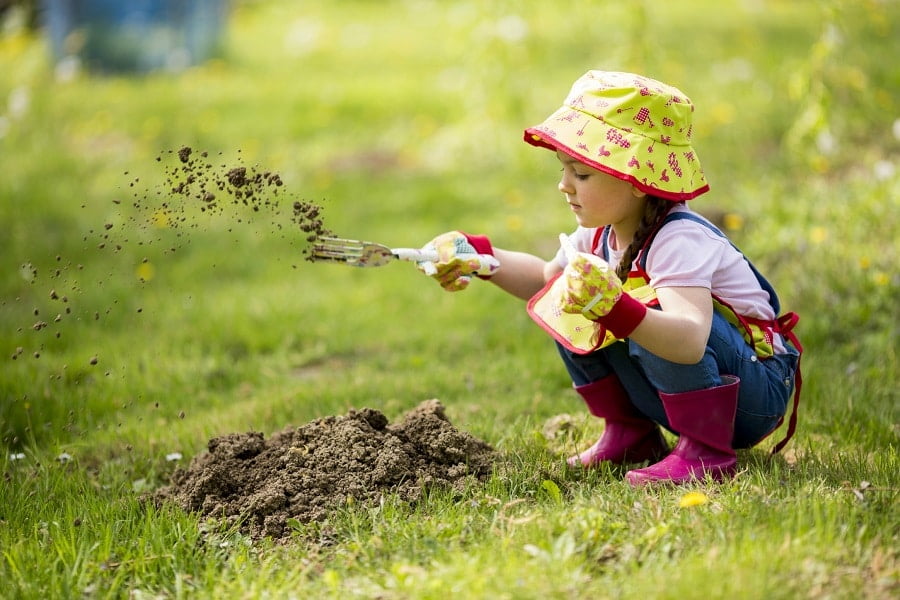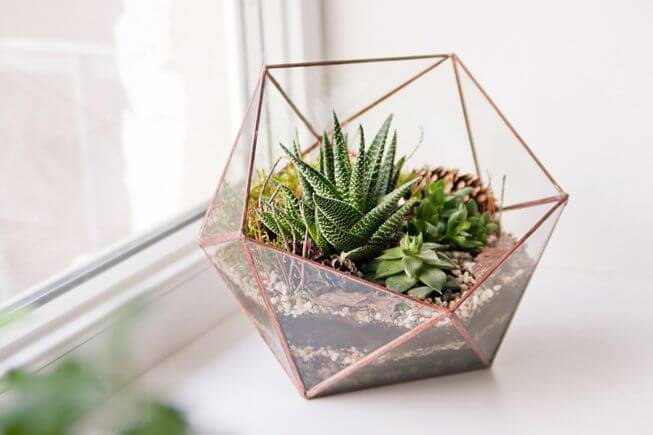
A terrarium project lets children arrange a small planted scene and observe how moisture and growth change over time. Start with a stable, wide-opening container that an adult has checked for sharp edges. Clear plastic is often more practical than fragile glass for children who will handle the container.
The ten ideas below include hands-on options and more delicate displays for an adult to assemble. A child’s age, supervision needs and tendency to put objects in their mouth matter more than how attractive a container looks in a photograph.
Choose plants and a container together
Closed terrariums retain humidity and suit small plants with compatible moisture and light needs, such as suitable miniature tropical foliage plants. Cacti and most succulents do not belong in a sealed, humid jar. For them, a pot with drainage is a more forgiving choice; see our succulent growing guide.
An open container loses moisture faster than a closed one, but an opening at the top does not provide drainage at the bottom. Water cautiously. A layer of gravel cannot make excess water leave an unperforated vessel. Use clean potting mix appropriate to the plants rather than assuming soil dug from the yard will work.
Oregon State Extension’s terrarium guide recommends small plants and compatible growing needs. The Royal Horticultural Society also distinguishes bottle gardens and terrarium care.
1. A small purpose-made clear container
Use a wide-mouth plastic terrarium container or a clear food-storage tub instead of a dismantled lightbulb. A working or discarded bulb is not a children’s craft vessel: do not break out its internal components.
A broad opening lets a child place a small plant with a spoon and adjust decorations without narrow tools. Keep the planting simple so the roots have room and the container can still be cleaned.
2. A teacup miniature garden
A teacup is an open miniature planter rather than a classic transparent terrarium. Let children design a small scene around a plant in a removable, draining inner pot. An adult should inspect the cup and handle it if it is fragile.
Take the plant out for watering, drain it, and empty the cup before putting it back. Do not assume a layer of stones makes planting directly in an undrained cup trouble-free.
3. A plastic ornament display
A purpose-made, opening plastic ornament can hold a tiny decorative scene. Use a stable stand for a children’s project rather than hanging fragile glass overhead. Small accessories are unsuitable for children who may swallow them.
The space may be too small for a rooted plant to grow for long. Treat it as a temporary display and plan to move the plant into a suitable pot. Avoid sealing a succulent inside.
4. A clear bottle garden
A clean, large plastic bottle can become an observation garden. An adult must do any cutting and make the edge safe before the child handles it. Choose a shape with a stable base and enough access for planting.
For a closed bottle garden, use humidity-tolerant plants and very modest watering. Check it together rather than treating the lid as a promise that no maintenance will ever be needed.
5. A cake-dome display
A clear dome over a planted tray makes it easy to see condensation. A lightweight plastic dome is easier to manage than a heavy glass cake cover. Keep the base secure, and have an adult lift a heavy lid.
Use plants that suit the enclosed conditions. Remove the cover as needed to manage excess moisture and provide access. Do not put a closed dome in direct sun where it can overheat.
6. A wide fishbowl
A wide opening makes a fishbowl easy to arrange, but a glass bowl still needs adult handling and a secure surface. A clear plastic bowl offers a similar view with less breakage risk.
Leave room between plants to see the soil and reach in for maintenance. Add water in small amounts and watch for accumulation at the bottom. This project is for plants, not fish or other animals.
7. A geometric terrarium
A purchased geometric container can be an adult-assembled display with a child’s help choosing the layout. Check the edges, seams and opening. Some decorative models are not watertight, and a metal frame does not guarantee sturdy construction.
Protect the surface beneath it and choose an accessible design. A complicated shape is less useful if nobody can remove a dead leaf or tend the plants without damaging them.
8. A wide-mouth jar
A large, clean jar makes a simple closed garden when matched with appropriate plants. Avoid narrow openings that make maintenance difficult. Have an adult handle glass, or use a clear plastic jar for children who want to carry their project.
Label the planting date on the outside. Children can draw the plants each week and record condensation without opening the jar repeatedly. A jar with persistent heavy condensation or standing water needs its moisture balance corrected.
9. An unused coffee-pot display
An intact coffee carafe can become an adult’s display project. It must be disconnected from its original appliance and never heated. Check the spout and rim for chips, and place it where children will not pick it up by a vulnerable handle.
Its opening and shape may limit planting access, so try arranging empty nursery pots first. If it is awkward to maintain, use another container rather than forcing the project to fit.
10. A plant-only aquarium garden
A small empty aquarium gives a group more room to plan a landscape. An adult should assess the tank, support and final weight before adding materials. Place it where it will remain; a filled glass tank is not a portable children’s toy.
Choose plants that share the same conditions and leave access for pruning. Do not collect wildlife or add a reptile to complete the scene. Animal enclosures require species-specific housing and care, which this planting project does not provide.
Build and care for the garden
- Clean the container, inspect it and choose a stable location in suitable indirect light.
- Add an appropriate growing mix and arrange the plants before decorating. Keep plant crowns at a suitable depth.
- Water sparingly, observing the mix and the bottom of the container. Do not fill a hidden reservoir.
- Use only clean, suitable decorations and keep small parts away from young children.
- Check for mold, damaged leaves, crowding and excess condensation. Adjust ventilation and watering to the plants and container.
Wash hands after handling potting mix. An adult should select plants suitable for the household, especially where children or pets might chew leaves. As plants outgrow the display, move them to suitable pots rather than trying to keep the miniature scene unchanged forever.
Image source: 1