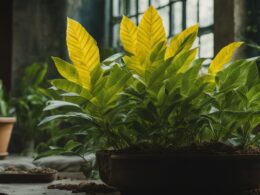
Prayer plant (Maranta leuconeura) is a tropical foliage plant whose patterned leaves change position through the day and often rise at night. Indoors, give it bright filtered light, a draining pot and steady moisture without leaving the roots waterlogged.
Start by confirming the name on the label. “Prayer plant” is also used loosely for related houseplants, and their care is not always identical. This guide concerns Maranta leuconeura.
Choose light and temperature together
A bright position protected from harsh direct sun is a useful starting point. A window does not automatically filter direct sunlight: check where sun actually falls at different times. Move the plant back or use a sheer curtain if necessary. A dark corner is not a substitute for protection from scorching.
Keep the plant in a comfortably warm, stable room, away from cold drafts, heating vents and air conditioners. The plant does not suddenly fail at 75°F, nor does it require a rigid temperature between 70°F and 75°F. Watch the conditions at the pot, particularly next to glass on cold nights.
NC State Extension’s Maranta profile describes its spreading habit and sensitivity to strong sun, low humidity, cold drafts and excessive fertilizer.
Use a suitable pot and growing medium

Choose a pot with drainage holes that comfortably accommodates the roots. The roots do not need to sit directly beside the holes. Avoid a much larger pot containing a deep volume of mix that stays wet long after the plant needs water.
Use a quality indoor potting mix that holds some moisture but drains freely. Check how the mix behaves rather than adding garden loam by default. If the plant is in a decorative outer pot, take it out for watering or empty the collected drainage promptly.
Repot when root growth and the condition of the mix justify it, preferably during active growth. Gently inspect the root ball, remove clearly dead material with clean tools and keep the crown at its previous level. Do not divide a weak new purchase simply to produce extra plants.
Water according to moisture, not a fixed schedule
Check the mix regularly. Water as the surface begins to dry while avoiding both a persistently saturated root zone and repeated complete drying. Wet the root ball evenly and let excess escape. Less active growth in cooler or dimmer conditions usually means the pot takes longer to dry.
Use room-temperature water as a practical precaution and direct it toward the mix. Water temperature does not determine how quickly droplets evaporate from leaves. Persistent leaf wetness, poor airflow and splashing are avoidable complications, particularly if spotting is already present.
Yellow or brown leaves are symptoms, not a diagnosis. Check moisture and drainage first, then light, roots, fertilizer use and water quality. Adding more water to a wilting plant with damaged, wet roots can make matters worse.
Manage humidity without keeping foliage constantly wet
A humidifier can help in a dry room when used and cleaned according to its instructions. A small pebble tray should not be expected to humidify the whole room; keep the pot above the water. Leave enough space for air to circulate and avoid directing appliance mist onto leaves.
Humidity is only one part of care. It does not make the plant immune to spider mites or compensate for poor watering. RHS houseplant guidance offers broader help with indoor growing conditions.
Feed and trim only as needed
During active growth, use a fertilizer suitable for houseplants at its labeled rate and frequency. “Half strength” depends on the product; half a teaspoon per gallon is not a universal equivalent. Account for fertilizer already present in fresh potting mix and avoid feeding stressed plants in an attempt to force recovery.
Remove dead leaves and shorten overly long stems with clean scissors when needed. You do not have to prune two or three times annually. Preserve enough healthy foliage for the plant to recover.
Propagate an established plant by division
Division is a straightforward option for a healthy clump. When repotting, separate portions that each have roots and living shoots, pot them into appropriately sized containers and give them stable warmth, light and moisture while they establish. Avoid breaking the plant into tiny pieces just to maximize numbers.
Inspect pests and leaf spots before treating
Look at leaf undersides, stems and nearby plants for mites, mealybugs or other pests. Isolate an affected plant while identifying the problem. A humid room does not guarantee pest control.
Water-soaked spots alone do not identify a particular fungal disease. Remove badly affected material where appropriate, improve care and seek a diagnosis if damage spreads. Do not assume neem oil will cure every leaf spot; any pesticide must be labeled for the plant, pest and indoor setting. Take a clear photograph and a record of recent care to a local plant adviser when the cause remains uncertain.