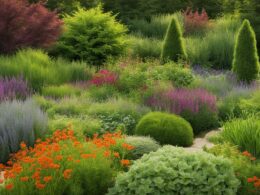
Edible landscaping combines food plants with an attractive, usable garden design. Start with the light, soil, climate and maintenance time you actually have. These fifteen plants offer different roles, from small herb borders to fruit trees; they will not all thrive together or produce food year-round in every climate.
Plan the layout before buying plants
Leave room for mature growth, access for harvest and seasonal gaps after annual crops are removed. Group plants with similar needs. Penn State’s edible-landscape guidance emphasizes matching moisture, light, drainage and fertility rather than placing edible plants wherever a decorative gap appears.
Use correctly identified edible varieties and check any pesticide label for the crop concerned. Do not assume a treatment used on nearby ornamentals is suitable for food plants. Begin with a few plants you cook with regularly.
Fruit for structure and seasonal interest
1. Blueberries
Blueberry bushes offer flowers, fruit and seasonal foliage, but their acid-soil requirements are a major design constraint. Test soil before planting and choose locally adapted varieties. Minnesota Extension’s blueberry guide provides a regional example; do not treat a general vegetable-bed pH recommendation as suitable for blueberries.
2. Strawberries
Strawberries can edge a bed or fill a dedicated container. Choose a type with the harvest pattern you want and plan for runners, renewal and fruit protection. Leave picking access so ripe fruit does not disappear beneath neighboring plants.
3. Apples
An apple tree can be a long-term focal point. Buy a named variety on a rootstock appropriate to the available space; growing a seed is not a reliable way to reproduce a favorite apple. Confirm pollination compatibility and pruning needs using a regional guide such as Minnesota Extension’s apple guide.
4. Peaches
Peaches need a climate and cultivar combination that suits local winter conditions and the growing season. Budget space for pruning and fruit care, not just the young nursery tree. They are an option for a gardener willing to maintain a fruit tree, rather than a guaranteed low-effort crop.
5. Cherries
Choose between sweet and tart cherries based on climate, available space and intended use. Check whether the variety needs a compatible pollinator and plan for birds competing for ripe fruit. Place the tree where harvesting and fallen-fruit cleanup are practical.
Vegetables for productive beds
6. Tomatoes
Tomatoes can make a strong seasonal feature with supports planned into the design. Favor a sunny position and a variety sized for the bed or container. Keep access for tying, watering and harvest; a plant hidden behind a dense border is harder to manage.
7. Carrots
Carrot foliage adds a fine texture, but the harvest comes from the roots. Give them a prepared bed with room for the chosen root shape and avoid crowding seedlings. Plan what will occupy the space after harvest rather than treating carrots as permanent groundcover.
8. Garlic
Garlic provides upright leaves and, with hardneck types, curled scapes. Match the variety and planting date to your region and reserve room until bulb harvest. Our garlic-growing guide covers harvest and curing; grow it for culinary use without disease-prevention promises.
9. Potatoes
Potatoes need a dedicated harvest area because digging the tubers disturbs the bed. Use healthy seed potatoes and plan for keeping developing tubers covered. Follow a local potato-growing guide; do not treat the plant’s foliage or berries as edible landscaping snacks.
10. Onions
Onions can create orderly rows or groups, but bulb development depends on the variety’s day-length requirements. Select appropriate seed, transplants or sets for your location. Regional onion guidance is more useful than a claim that any bulb will grow well anywhere.
11. Lettuce
Different leaf shapes and colors make lettuce useful near the front of a bed. Plan small successive sowings where the season permits. Harvest timing depends on the variety and whether you want baby leaves or full heads; thirty days is not a universal promise.
12. Spinach
Spinach is a cool-season leafy vegetable, not a culinary herb. Use it where you can harvest leaves easily and plan a replacement crop when heat or bolting ends the planting. A little shade does not make every hot climate suitable for summer spinach.
Herbs for borders and containers
13. Basil
Basil is useful close to the kitchen or beside a seating area where its leaves are easy to harvest. Plant when local conditions are warm enough and keep up with watering, especially in containers. Choose a variety for the flavor and growth habit you want rather than medicinal claims.
14. Oregano
Culinary oregano can make a spreading patch in a sunny, well-drained position. Leave room for that spread or grow it separately where it can be managed. Verify the plant’s identity and culinary suitability rather than assuming every ornamental oregano offers the same flavor.
15. Thyme
Culinary thyme suits a sunny, well-drained herb edge or container. Choose a culinary variety if harvesting is the main purpose; low ornamental groundcovers have a different role. Avoid placing it on the same heavy watering schedule as thirsty crops merely because both are edible.
Build a manageable first season
Sketch the permanent trees and shrubs first, then add seasonal beds and herb containers. A small successful planting is easier to expand than a crowded design to undo. Check soil texture and improvement options before treating every poor-growing plant with more fertilizer.
Keep notes on harvest dates, maintenance time and which crops your household uses. Those observations will tell you which of these fifteen candidates deserves more space next year.