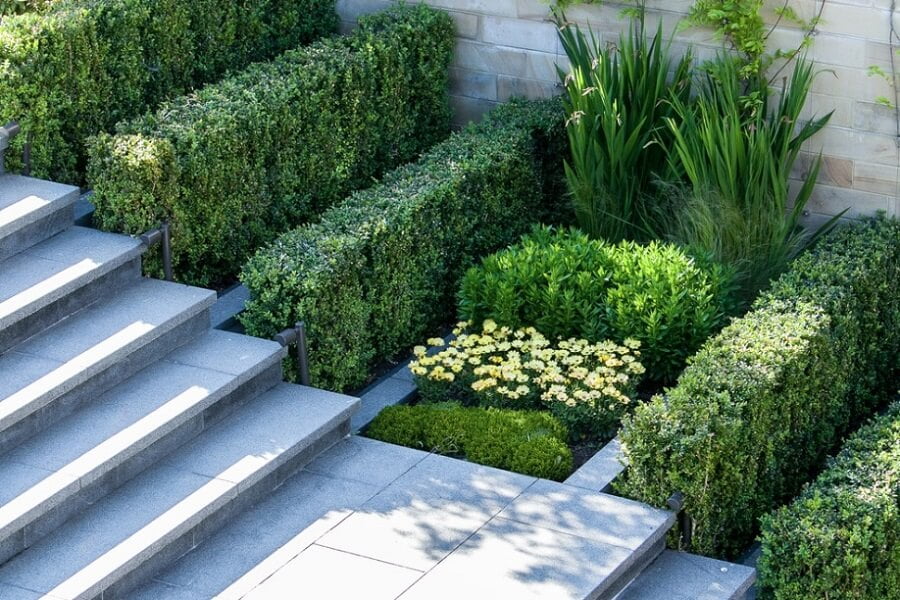
Evergreens give a garden structure through the year, but successful planting starts with mature size, climate, light and soil. Use them to solve a specific design problem: framing a view, defining a path or making a screen. Seventeen well-placed choices are more useful than filling every empty space.
Before buying, sketch the bed at mature size. Mark windows, paths, utilities and maintenance access. “Dwarf” often means slower or smaller than the species, not a plant that stops growing.
1. Make one compact plant a focal point
A naturally rounded conifer, such as a suitable bird’s-nest spruce cultivar, can anchor a small bed. Check its eventual spread and local suitability rather than relying on the nursery-pot size. Leave enough open space around it for its shape to remain visible.
2. Build a mixed privacy screen
Combine compatible evergreen species and sizes where space permits, instead of depending on one tightly packed row. Position the screen according to the view you need to block. Keep boundaries and maintenance access in mind, and allow the plants to grow without crowding.
3. Keep foundation planting in scale
Use genuinely compact selections below windows and beside entrances. Measure their mature width from the building as well as from each other. Do not cover vents, meters or inspection access. A plant needing constant severe cutting is usually too large for its location.
4. Use topiary where you can maintain it
A clipped cone or other simple shape can emphasize a doorway. Choose a species that tolerates the intended pruning and plan for regular care. Many conifers do not recover well from cutting into bare old wood, so do not assume any evergreen can be reshaped indefinitely.
5. Create a calm backdrop
Dark foliage can set off seasonal flowers or pale stems. Keep the backdrop far enough behind the foreground planting to avoid crowding and excessive shade. Repeat a small number of plants instead of mixing every available foliage color.
6. Define a garden room
Place shrubs to suggest an enclosure while leaving an inviting opening. Test the layout with markers before digging. Check how the planting will affect sunlight in the seating area and adjoining beds as it grows.
7. Choose true groundcover forms
Use a named spreading juniper or other suitable low-growing evergreen when you need ground coverage. A young tree-shaped spruce is not a groundcover simply because it is currently short. Allow for mature spread and provide weed control while plants establish.
8. Add a single spiral or formal accent
A trained plant can be a focal point beside a path, but it comes with a pruning commitment. Place it where you can reach all sides safely. If that maintenance does not appeal, choose a naturally upright form with a similar visual effect.
9. Contrast foliage texture
Combine fine foliage with broader leaves, or a rounded shrub with an upright conifer. Limit the number of contrasts so the planting remains coherent. Large firs and spruces belong only where their mature dimensions fit; a compact cultivar is a separate selection, not a promise attached to every species.
10. Repeat shapes along a route
A recurring rounded or upright form can guide the eye toward an entrance. Keep plants clear of the usable path width at maturity. Small variations in spacing can look natural, but avoid positions that obscure steps or sightlines.

11. Use containers selectively
Choose a compact evergreen and a weather-resistant container with drainage. Allow for watering, root protection in winter and eventual repotting. A full-size pine does not become permanently suitable for a balcony because it starts in a pot; verify structural load limits before placing heavy containers on elevated surfaces.
12. Include flowering broadleaf evergreens
Camellias, rhododendrons and pieris may add flowers as well as leaves where soil and climate suit them. Flowering time and evergreen habit vary by species and cultivar. Match the plant to the location instead of assuming every flowering shrub remains evergreen through your winter.
13. Plan wind protection from the actual wind
A windbreak needs appropriate placement, height and density. Observe prevailing cold-season winds and consider effects on snow, shade and access. The Department of Energy’s landscaping guidance explains the principle, but a north- or east-side row does not guarantee a particular energy saving for every house.
14. Use foliage color sparingly
Gold, blue or variegated foliage can mark a focal point. Check seasonal color changes and exposure requirements. Korean fir ‘Silberlocke’, for example, shows pale needle undersides through its curled foliage; it is not simply a white-variegated version of any fir.
15. Leave room for growth
Resist filling every gap with another permanent shrub. Use mulch or suitable temporary seasonal planting while the main plants establish. Plan which temporary plants will be removed rather than letting them compete with the eventual evergreen framework.
16. Plant slopes with drainage in mind
Suitable spreading evergreens can cover a stable slope, but new plants do not immediately solve erosion or structural instability. Address runoff and safe access first. Severe erosion, failing retaining structures or unstable ground needs appropriate professional assessment.
17. Match the plant to the site
Make a final check of hardiness, summer heat, drainage, soil reaction, exposure and mature size. Ask a local nursery or extension service about recurring disease problems for your shortlist. A visually ideal plant is a poor choice if the site cannot meet its needs.
Turn the ideas into a manageable planting plan
Choose one principal function for each bed, then list the plants, mature widths and care tasks. Check the view from indoors as well as from the path. Include establishment watering and replacement costs in the budget, and reassess after the first growing season before expanding.
Useful references include the RHS shrub-growing guide, Minnesota Extension’s evergreen-care guidance and the Department of Energy landscaping guide.
Image source: depositphotos.com.