Asparagus is a long-lived perennial, so choosing and preparing its permanent bed matters more than getting a quick first harvest. Plant healthy crowns or raise plants from seed, give the roots time to establish, and leave the fern growth to replenish the plant after harvesting.
1. Choose between seeds and crowns
Seeds offer a way to raise more plants, but add time before harvest. Follow the seed packet’s sowing instructions and your local planting calendar. Crowns are dormant root systems and are usually the easier starting point for a small home bed. Do not assume that a variety described as early will produce a full crop in its first year.
2. Select suitable crowns
Buy healthy planting stock from a reputable supplier and choose a variety recommended for your climate. Jersey-series hybrids are examples of male hybrids; Purple Passion is open-pollinated and should not be described as an all-male variety. Check the exact cultivar description rather than extending a claim to every asparagus variety. Keep crowns cool and their roots from drying out while awaiting planting; do not leave them soaking in water. Plant promptly at the locally recommended time.
3. Prepare a permanent bed
Choose full sun and well-drained soil, with room for tall summer ferns. Remove perennial weeds before planting, since removing them from an established crown bed is difficult. Have the soil tested and use the result to guide lime and fertilizer. A blanket layer of fertilizer or routine application of greensand is not a substitute for a soil test. University of Minnesota Extension gives a soil pH range of 6.5–7 for asparagus; your local extension service can interpret your result and recommend amendments.
4. Plant crowns at an appropriate depth
Planting recommendations vary with soil and region. Maryland Extension describes placing crowns 15–18 inches apart in a trench, spreading their roots over a small mound and initially covering the crowns with about 2 inches of soil. Rows need several feet between them for mature growth and access. Follow regional guidance for final trench depth: a universal 12-inch hole is not suitable for every soil. Add soil gradually as shoots grow if using the trench method. Water after planting to settle the soil around the roots, without leaving the bed waterlogged.
5. Care for the growing plants
Check soil moisture during establishment and dry spells; water the root zone as needed rather than following an instruction to keep the bed constantly wet. Weed carefully around young shoots and avoid damaging the crowns. Inspect for asparagus beetles and other problems, identify the cause, and choose a locally recommended control. Do not apply sea salt as a general pest treatment. Salt is not a replacement for identifying a pest, and the crop’s tolerance does not make indiscriminate salt application good garden practice. Avoid salty amendments against crowns.
6. Wait before harvesting
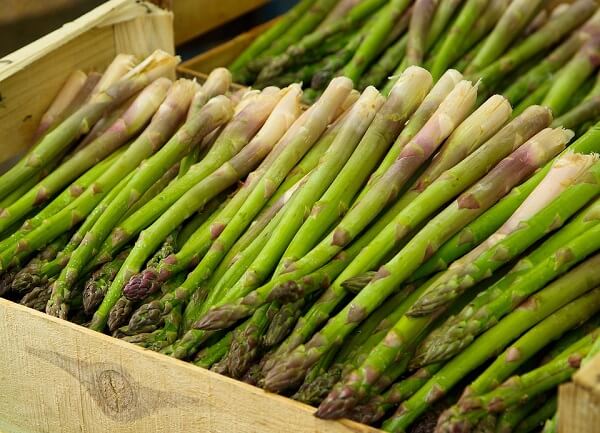
Allow a new planting to establish. Maryland Extension recommends no harvest in the first season after planting crowns, followed by a light harvest in the second; seed-grown plants need an additional establishment season. Plant vigor matters, so stop sooner if growth is weak. Harvest tender spears while their tips remain tight, not after the buds loosen and start opening. Minnesota Extension describes harvesting spears about 6–9 inches tall. Snap or cut carefully near ground level without cutting into developing buds. The mature harvest period varies by region and bed condition; do not force a fixed schedule on a struggling bed.
7. Keep the ferns after harvest
Let remaining spears develop into ferns. Their growth supports the next season’s crop, so continue watering when needed and controlling weeds after you stop cutting spears. Remove dead top growth at the locally recommended cleanup time, rather than cutting healthy green ferns simply because harvest is over. Keep access paths clear and consider the shade cast by mature ferns when positioning nearby crops. A dedicated bed simplifies maintenance, but asparagus does not require a blanket ban on every neighboring plant.
Sources and regional guidance
See Maryland Extension’s asparagus guide, Minnesota Extension’s growing guide, harvest guidance, and asparagus nutrient management.