For a small fruit tree, a properly fitted frost cloth can reduce damage during a light frost. It cannot guarantee a crop through a hard freeze, strong wind or prolonged cold. Protection depends on the fruit species, bud stage, temperature at the tree and duration of exposure.
Check the stage and local forecast
Dormant buds generally tolerate colder conditions than open flowers and newly set fruit. Use a crop-specific critical-temperature chart rather than assuming every blossom freezes at the same temperature. A forecast from a nearby town may differ from a low spot in your garden.

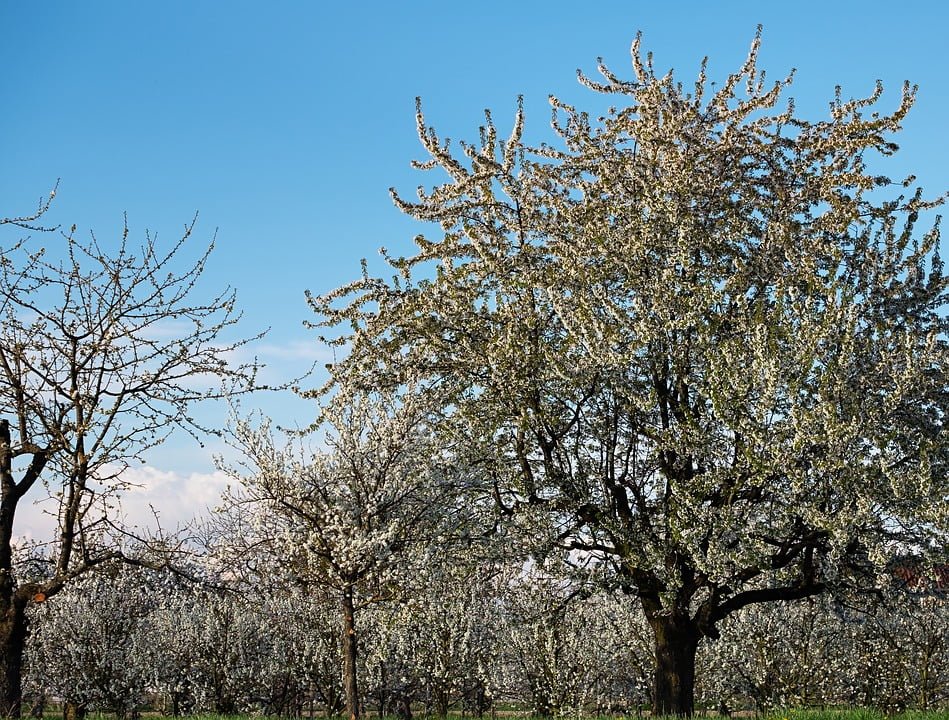
Image Source: Pixabay
Utah State’s frost advisory links to stage-specific information and explains the limitations of protection. Place an appropriate thermometer near the planting to learn how your site differs from the forecast, and prepare covers before the cold arrives.
Cover a small tree before temperatures fall
Use lightweight frost cloth or a suitable light sheet large enough to reach the ground. Secure it so it retains warmth from the soil rather than leaving the bottom open like a canopy. Support it where needed to avoid pulling on fragile flowers or branches.
Do not wrap plastic directly against blossoms. Remove or open the covering when the cold has passed and conditions allow, so the tree has light and pollinators can reach the flowers. Check the cover’s instructions and the next night’s forecast.
This is practical for a tree you can cover safely from the ground. Trying to drape a large tree from a ladder in darkness or wind introduces a different hazard and may still provide little protection.
Distinguish moist soil from overhead spraying
If the soil needs water, appropriate daytime watering can help it store heat. Avoid saturating an already wet root zone. This is different from spraying the flowers during a freeze.
Commercial frost irrigation depends on a designed system, adequate water supply, weather conditions and continuous operation. An improvised lawn sprinkler can leave uneven coverage, and stopping at the wrong time can cause damage. Obtain crop- and site-specific Extension advice before considering it; do not assume a quick mist will keep buds closed or prevent freezing.
Avoid improvised heaters and miracle fixes
Do not put open flames, unattended grills or improvised heaters beneath covers. Ordinary decorative lights are not a dependable frost-protection plan. Electrical equipment must be suitable for its intended outdoor use, and fabric must remain clear of heat sources.
Fertilizer is not a reliable way to postpone bloom before an approaching frost. Follow normal crop nutrition guidance instead of applying nitrogen in an attempt to manipulate flowering.
Reduce future risk through site and variety choices
When planting, consider locally suitable cultivars, bloom timing, full-sun requirements and cold-air drainage. Avoid a low pocket where cold air collects if a better site is available. A north-facing slope can affect warming and bloom timing in some climates, but putting a fruit tree in deep shade is not a universal solution.
USU’s high-mountain fruit guide illustrates how air drainage and growing-season length affect success. Adapt those principles with local advice; Utah cultivar choices are not recommendations for every region. See our fruit-tree growing guide for broader planning.
After a cold night
Wait for tissues to thaw before assessing damage. Browning inside flowers or developing fruit can indicate injury, but evaluate several parts of the tree rather than judging the whole crop from one blossom. Some surviving flowers may still set fruit. Continue normal care and avoid severe pruning or extra fertilizer as an immediate reaction to flower loss.