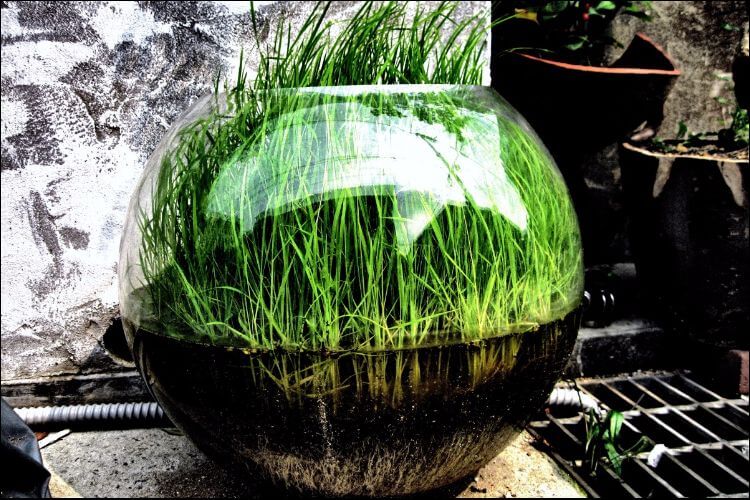
You can root many houseplant cuttings in water, but keeping a plant there for months or years is a different task. A cutting may initially live on stored reserves. For continued growth, it needs suitable light, mineral nutrients and an oxygen supply around its roots as well as water.
Choose between propagation and permanent water culture
For propagation, the aim is to produce roots before moving the cutting into potting mix. For long-term water culture, plan how you will support the plant, supply nutrients, keep the container clean and maintain the root environment. A jar on a windowsill is not automatically a complete hydroponic system.
Start with a plant known to root readily from stem cuttings, such as pothos, philodendron, tradescantia or coleus. Identify the species before cutting: not every leaf can make a new plant, and not every woody herb or houseplant will adapt equally well. Keep potentially toxic plants away from children and pets.
Prepare a healthy cutting
Choose healthy, pest-free growth and clean cutting tools. For a node-rooting stem cutting, include a node and remove the leaves that would sit below the waterline. Keep the remaining foliage above water. A submerged leaf that decays can foul a small container quickly.
Use a clean, stable vessel that supports the cutting without crushing the stem. Label different cuttings so you can follow the care requirements of each plant. Avoid packing many stems into a narrow opening where their roots will become difficult to separate.
Illinois Extension’s guide to houseplant cuttings explains the different propagation methods. Follow the method for your plant rather than assuming that one cutting shape works for everything.
Provide light without overheating the jar
Use suitable light for the plant, often bright indirect light for common houseplant cuttings. Direct sun can heat a small glass vessel and encourage algae. Clear glass lets you observe roots, but an opaque container limits light reaching the solution; either still needs regular inspection and cleaning.
Keep the vessel away from heaters, cold drafts and unstable ledges. If shoots become pale or stretched, assess the light rather than immediately adding fertilizer. If leaves scorch, reassess exposure. Water culture does not remove the plant’s normal light and temperature requirements.
Refresh water and inspect roots
Use clean water suitable for the plant. Tap water is not universally unsuitable, and bottled or well water is not automatically better: dissolved salts and water quality differ. Avoid water contaminated by household cleaners, and investigate source-water quality if repeated problems occur.
Check the level often enough that developing roots do not accidentally dry out. Replace the water regularly and clean the vessel when deposits develop. Illinois Extension’s beginner propagation guidance suggests fresh water every three to five days for water-rooted cuttings. Cloudiness, odor or deteriorating tissue warrants attention sooner; a month or a year between changes is not a general care rule.
Decide when to pot up
Once the cutting has a usable root system, it can be moved into an appropriate, freely draining potting mix. Handle roots gently and settle the mix around them without forcing a tangled mass into a tiny pot. Follow species-specific guidance for root development and aftercare rather than waiting for a universal root length.
Monitor moisture carefully during the transition. Roots formed in water are moving into a different environment, so avoid both a drying root ball and permanently saturated mix. Some temporary adjustment is possible; ongoing collapse or rot needs investigation.
For continued growth in water, supply a complete system
A permanent setup needs a suitable complete nutrient product, mixed according to its directions, and a method of providing oxygen consistent with the system design. Do not use an arbitrary number of fertilizer granules. Keep the growing point above the solution where the plant requires it, and avoid changing water levels in a way that defeats a passive system’s intended air gap.
The University of Minnesota hydroponics guide describes containers, anchoring, nutrients, light and maintenance. Larger or longer-lived plants require more planning than a short-term cutting display. Record solution changes and plant response; if growth declines, check roots, light and water conditions before adding more nutrients.
Know the limits
Water-grown plants are not guaranteed to be disease-free, mold-free or maintenance-free. Remove deteriorating material and investigate persistent root or leaf problems. Avoid claiming a fixed lifespan for basil, rosemary or another plant without accounting for species, harvest and growing conditions.
Before a holiday, arrange checks appropriate to the container and system. A small jar can lose water, and powered equipment can fail. The best starting point is a few healthy cuttings you can observe regularly, then a properly planned setup if you want to keep growing without soil.