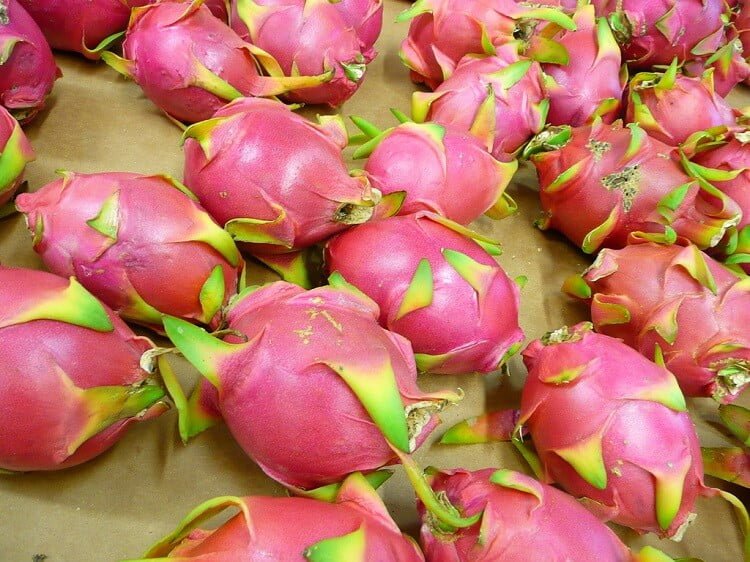
Dragon fruit is a climbing cactus grown for its large night-opening flowers and edible fruit. It needs a suitable warm growing environment, drainage and substantial support. It is not a plant that grows productively anywhere simply because it belongs to the cactus family.
Before buying, decide whether you have room for a mature supported plant and a way to protect it from unsuitable cold. If you will keep it in a container, use the separate potted dragon fruit guide for container stability and winter-movement planning.
Choose a known plant and a suitable climate
Ask the nursery for the botanical or cultivar identity and its pollination requirements. Fruit color alone does not tell you whether a plant can set fruit with its own pollen. A rooted cutting from an identified plant offers more predictable characteristics than seed from an unknown fruit.
Dragon fruit is generally grown in tropical or subtropical conditions. Frost, prolonged cold and extreme exposure can damage it. The University of Florida growing guide also notes that strong sunlight can cause injury in some climates. Adapt exposure gradually and seek local guidance; “full sun” is not permission to move a sheltered plant abruptly into extreme heat.
Choose a site where water does not remain around the roots after rain. Check local planting timing rather than transferring south Florida’s calendar to a colder region. A sunny indoor window may sustain a plant without providing the conditions needed for reliable fruiting.
Understand seed versus cutting propagation
Seed-grown plants vary and may take many years to fruit; UF/IFAS reports that the wait can extend to seven years. Cuttings generally preserve the parent plant’s characteristics, but they still need to root and establish. Neither method guarantees fruit within a fixed number of months.
Use healthy propagation material and clean tools. Let a fresh cutting’s wound dry and heal appropriately before rooting it in a suitable well-drained medium. Do not assume that a fixed drying period prevents every infection or that routine pesticide treatment is necessary.
A purchased rooted plant can simplify the start. Inspect the root ball and stems, keep the identification label and ask how the plant was previously grown so you can transition it gradually.
Provide support before the plant becomes heavy
Plan a strong, stable support for mature stems and fruit, not just the small cutting. Leave access for inspection, pruning and harvesting. A weak decorative stake can become inadequate as the plant branches and weight accumulates.
Keep ties from cutting into stems and check them as growth expands. Do not direct the plant onto a building, tree or structure without considering access and the eventual load. Mature size is part of the planting decision, not a problem to postpone until the support fails.
Plant and manage moisture carefully
Use a site or potting medium with suitable drainage while maintaining adequate water during active growth. Avoid both prolonged waterlogging and treating a productive tropical cactus as a plant that never needs irrigation. Check conditions at the roots rather than keeping the support pole wet as a substitute for watering the plant.
Plant rooted material at an appropriate depth and settle it gently. Fertilize according to a locally appropriate program and the product directions, accounting for plant age, soil or medium and growth. A universal two-month feeding schedule or a buried dose of fertilizer is not necessary for every situation.
Train and prune for access
Guide healthy stems onto the support and avoid a dense, inaccessible tangle. Remove damaged, dead or diseased material with suitable clean tools and obtain advice if rot is spreading. Keep stems away from ground conditions that encourage damage.
Pruning needs depend on the plant’s stage and structure. Do not apply generic fruit-tree instructions to this climbing cactus or promise that cutting any branch automatically increases yield. The UC Agriculture and Natural Resources pitahaya resources offer a regional route to variety and cultivation information.
Check flowering and pollination
Some cultivars are self-incompatible and need pollen from a compatible different plant. Two cuttings of the same clone do not solve that problem. Ask about compatibility before buying a second plant, and keep their labels distinct.
Flowers open mainly at night, sometimes remaining open into the morning. If flowers appear without fruit, consider pollination, maturity, weather and plant condition rather than automatically adding fertilizer. Local growers or extension specialists can help interpret the cultivar’s behavior.
Harvest according to the cultivar

Look for the expected ripe skin color and fruit condition for your variety. Do not use one calendar month or a fixed number of annual crops for every region. Handle fruit carefully, avoiding spines where present, and wash it before cutting.
Enjoy the flesh fresh or in recipes, but assess flavor and harvest performance from your own cultivar and conditions. Old supermarket prices do not establish that home production will be profitable. Begin with a realistic growing trial and record flowering, harvest and care over the season.