Reducing backyard rats takes a combination of removing food, limiting shelter, protecting buildings and controlling an established infestation. A scent repellent alone will not solve a yard that provides spilled feed, accessible rubbish and nesting cover. Start with the sources you can change, then monitor for continued activity.
Confirm what animal is present before choosing control. Droppings, gnawing and burrows can guide an inspection, but a distant nighttime glimpse is not always enough. A pest professional or local Extension service can help distinguish rats from other wildlife and identify entry routes.

Make food harder to reach
Use sturdy, closed rubbish containers and clean spills around them. Store pet food and birdseed in rodent-resistant containers, bring uneaten pet food indoors and pick up fallen fruit. Inspect beneath bird feeders; a feeder that appears tidy from above may be supplying a daily meal on the ground.
Keep compost managed and avoid exposed food waste. If you keep poultry, examine feed storage, spilled grain and the run as part of the same problem. Removing one food source while leaving several others available is unlikely to produce lasting control.
Repair leaks and remove unnecessary water sources. Do not withhold drinking water from pets or livestock; provide it in a managed setting and address spillage instead.
Reduce shelter and protect the house
Move clutter and stored materials into orderly, inspectable storage. Keep access available along foundations so damage and droppings are visible. Dense cover immediately against a building deserves inspection, but clearing every shrub across the property is not necessary.
Look for damaged doors, vents and gaps around service penetrations. Use durable exclusion materials appropriate to the building and maintain required ventilation. Do not block a functioning drain or seal an opening without considering whether animals are already inside. A professional can coordinate exclusion and control when that is uncertain.
Do not fill an unidentified burrow with poison, fuel, bleach or expanding foam. Burrows may connect to structures or belong to nontarget animals, and improvised treatments create additional risks.
Choose control that protects children and wildlife
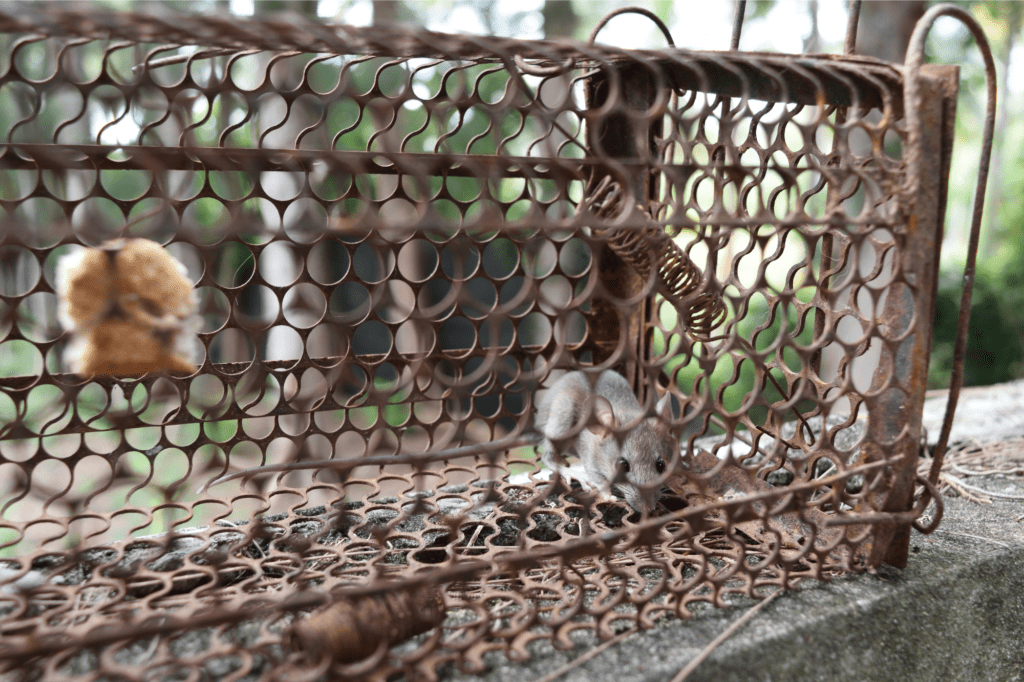
The CDC recommends snap traps for rodents and advises against glue and live traps. Select equipment intended for rats, follow its instructions and place it where children, pets and nontarget wildlife cannot reach it. Protected placement may require a suitable enclosure or professional installation.
Check traps regularly and use the cleanup precautions below for dead rodents and contaminated material. Do not handle a live trapped rat. Continued signs after an initial effort call for reassessing food, entry routes and placement rather than adding unprotected traps throughout the garden.
Rodenticides carry exposure risks for other animals. Do not scatter bait, use agricultural products outside their labeled use or make poison recipes. For a persistent outdoor infestation, ask a licensed professional about the need for control, label restrictions, tamper-resistant stations and follow-up monitoring.
Clean contaminated areas without raising dust
For droppings or nests on surfaces, follow the CDC rodent-cleanup instructions. Wear rubber or plastic gloves; do not dry-sweep, vacuum or pressure-wash contaminated material before disinfection. Wet it with an appropriate disinfectant, allow the required contact time and remove it as directed. Wash hands after removing gloves.
That surface-cleaning guidance is not an instruction to disinfect the entire garden soil. Heavy infestations, contaminated enclosed spaces and air ducts need additional precautions and professional advice. Never mix cleaning products or pour disinfectant into burrows.
Track results and maintain the changes
Keep a short log of sightings, fresh droppings, damaged food containers and the actions taken. Photos from the same inspection points make it easier to distinguish old damage from continuing activity. Continue checking after captures stop.
Peppermint oil, ammonia, vinegar and ultrasonic gadgets should not be treated as substitutes for food control, exclusion and an appropriate trapping program. There is no credible promise of a permanently rat-free open yard. Sustained maintenance and early response to new evidence are the practical goals.