

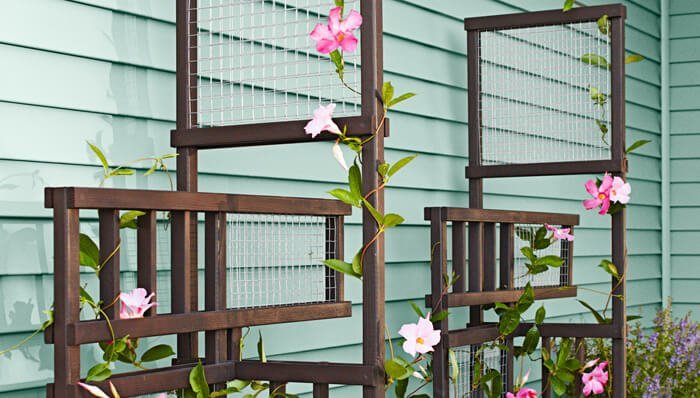
A useful trellis matches the plant’s growth habit and its mature weight. Tomatoes need support and regular tying; vining cucumbers climb with tendrils; grapevines become permanent woody plants that need a durable structure and a training system. The three examples below explain how to plan and assemble each kind without treating one frame as suitable for every crop.
Plan the site and support before planting
Mark the growing area, paths and access for picking. Consider which side a tall structure will shade, how you will reach its top, and whether a loaded frame could lean into a path or neighboring bed. Install supports early so you are not driving posts through established roots later.
Make a materials list from the chosen design: posts, braces, frame members, suitable fasteners, the climbing surface and soft plant ties. Use a manufacturer’s complete system or a detailed extension plan for structural dimensions and anchoring. Soil, wind exposure, span and crop weight all affect those choices. A fixed post depth or wire tension cannot safely be prescribed for every yard.
Check for buried services before driving posts or digging. Wear eye protection and gloves for cutting and assembly, cover sharp wire ends, and get help handling large panels. Keep projecting stakes and wire out of walking routes.
1. A tomato support with upright posts and a crossbar
A frame carrying vertical strings is an option for indeterminate tomatoes when you are willing to train them regularly. A strong cage can be simpler for a home gardener, especially for a bushier plant. Check whether your variety is determinate or indeterminate before deciding how heavily to prune it.
- Choose the frame. Allow enough height for the variety and enough working room between plants. The crossbar and its connections must carry the combined wet foliage and fruit, not just empty strings.
- Set and brace the posts. Follow the chosen system’s installation instructions. Do not rely on loose PVC fittings over improvised metal uprights as proof that a frame can carry the load.
- Add the supports. Attach purpose-made plant-support cord or another suitable support to the frame. Keep ties loose around stems; inspect them as stems thicken.
- Guide new growth. Add ties or clips as the plant grows instead of forcing a large unsupported stem back into position. Prune only according to the variety and training method.
- Check the frame during cropping. Look for sagging crossbars, leaning posts, worn ties and fruit pressing against hardware.
The University of Minnesota guide to vegetable supports compares cages and trellises, including the limits of short conical tomato cages. Choose a support you can maintain through the whole season, not just one that fits the young transplant.
2. A permanent grapevine trellis
For grapes, choose the cultivar and training system together. A high-wire system for a trailing cultivar and a system for upright shoots need different arrangements. An arbor grown mainly for shade also requires different management from a row managed for accessible fruit.
- Select a documented design. Start with an extension grape-trellis plan suitable for the cultivar and site. Draw the end posts, intermediate posts, wires and anchors before ordering materials.
- Build the end assemblies first. These resist the pull of the wires. Braces and anchors are part of the design, not optional extras that can be omitted merely because there are few vines.
- Install the remaining posts and hardware. Use outdoor-rated components specified for the system. Keep anchors clearly visible and out of routes used by people or machinery.
- Fit and tension the wires as specified. High-tensile wire stores energy. Use the proper tools and manufacturer’s method; do not copy a universal tension number from a generic article.
- Train and maintain the vine. Guide a young trunk to the support, then develop the arms or canes required by the chosen system. Inspect ties and structure annually and after storms.
Minnesota Extension’s grape-trellis overview explains why vine vigor and canopy arrangement matter. Its home grape guide also covers the pruning that keeps a supported vine productive. A sturdy trellis does not remove the need for annual training.
3. An A-frame or panel trellis for cucumbers
Choose a vining cucumber rather than assuming a compact bush variety will cover a tall frame. An A-frame gives vines a climbing surface on each side and can make fruit easier to see. Leave enough room around it to pick without stepping on the growing bed.
- Choose a climbing surface. A purpose-made garden panel, securely attached mesh or a framed trellis can work. Openings should let you harvest without trapping hands or fruit.
- Assemble the frame. Secure the two sides at the top and brace them so they cannot spread or fold unexpectedly. Follow the selected design for anchoring.
- Finish exposed edges. If a metal panel must be cut, secure it while working and make every cut end safe. Do not leave sharp cut wires as exposed feet beside a path.
- Install before the vines spread. Plant according to the seed packet’s spacing and gently guide early growth toward the support.
- Inspect as fruit develops. Keep fruit clear of narrow openings and remove damaged ties. Check anchors after windy weather.
A cattle panel can be a material choice, but bending one into a tent and pushing cut ends into the soil is not a universal construction plan. Select the frame and anchoring for the actual panel and site. A ready-made trellis is a reasonable option when it comes with clearer installation guidance than an improvised design.