Peanuts are warm-season legumes whose pods develop underground after the plants flower above ground. A harvest in roughly four months is possible for some varieties and conditions, but it is not a reliable promise. Choose seed with a maturity period that fits your local frost-free season.
Check the season before buying seed
Iowa State Extension’s home-growing guidance describes a minimum of about 120 frost-free days and soil around 65°F for germination. Longer-season varieties can need more time. Use a soil thermometer and local frost information rather than treating April or May as a universal planting date.
Buy seed peanuts labeled with the variety and planting instructions. Roasted peanuts will not grow. In a short season, ask your local extension service about suitable early varieties and whether starting plants indoors is worthwhile.
Prepare a sunny, loose-soil bed

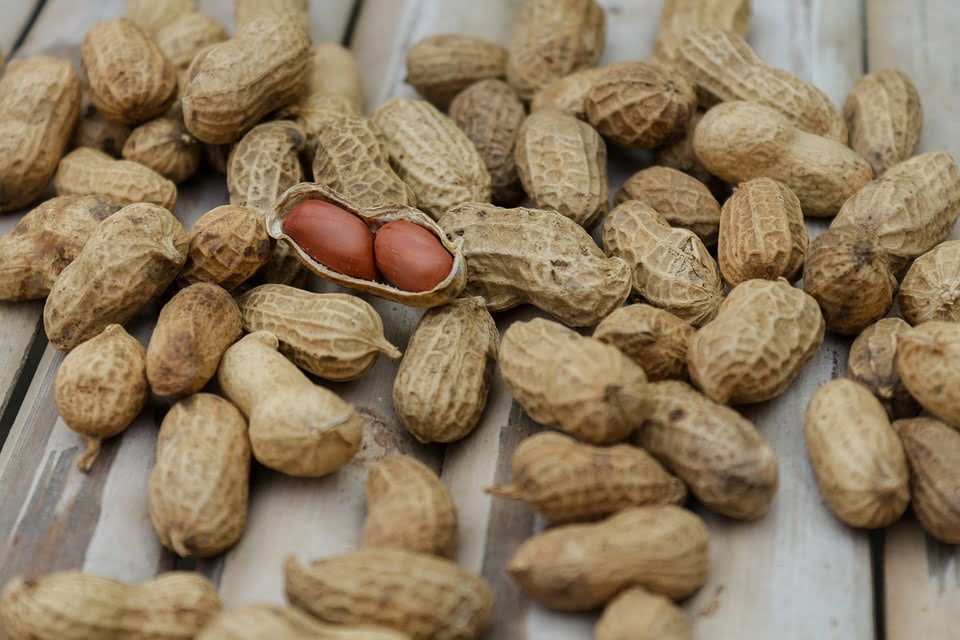
Image Source: Pixabay
Choose full sun and well-drained soil. Loose soil allows the flower stalks, called pegs, to enter the ground and the pods to develop. Sunlight does not need to penetrate the soil to reach the peanuts.
For an Iowa-style home planting, the extension guide recommends seeds 1–1½ inches deep, 6–8 inches apart, with rows 24–36 inches apart. Follow your seed supplier’s and regional guidance if their recommendations differ. Leave room to inspect the plants without repeatedly compacting the bed.
Manage water and fertility
Check soil moisture rather than watering automatically once a week. Rainfall, heat and soil texture change how quickly a bed dries. Avoid waterlogging, and take care not to damage developing pegs when weeding around established plants.
Clemson Extension’s peanut guide bases fertilizer, lime and calcium recommendations on a soil test. Peanuts can obtain nitrogen through a relationship with suitable bacteria, but that does not mean every plant needs no fertility management. Ask about appropriate inoculation if peanuts are new to the site.
Check maturity and lift carefully
Yellowing foliage is a cue to investigate, not a complete maturity test. Compare the crop with the variety’s expected harvest period and open sample pods. Clemson describes dry roasting-peanut harvest around 130–150 days, with internal hull and seed-coat changes helping indicate maturity.
Loosen the soil and lift carefully so pods remain attached. Do not simply tug hard on the foliage. Plan harvesting around your local weather and frost risk.
Cure before storage
Freshly dug peanuts are moist. Follow a regional extension curing method in a dry, well-ventilated location, allowing enough time before storage. Keep the pods protected from pests and discard moldy or damaged material. Peeling the kernels immediately and leaving them on a counter is not a dependable storage method.
Record the planting date, variety and harvest results. A small first crop will tell you more about your site than a promise of an effortless four-month harvest.