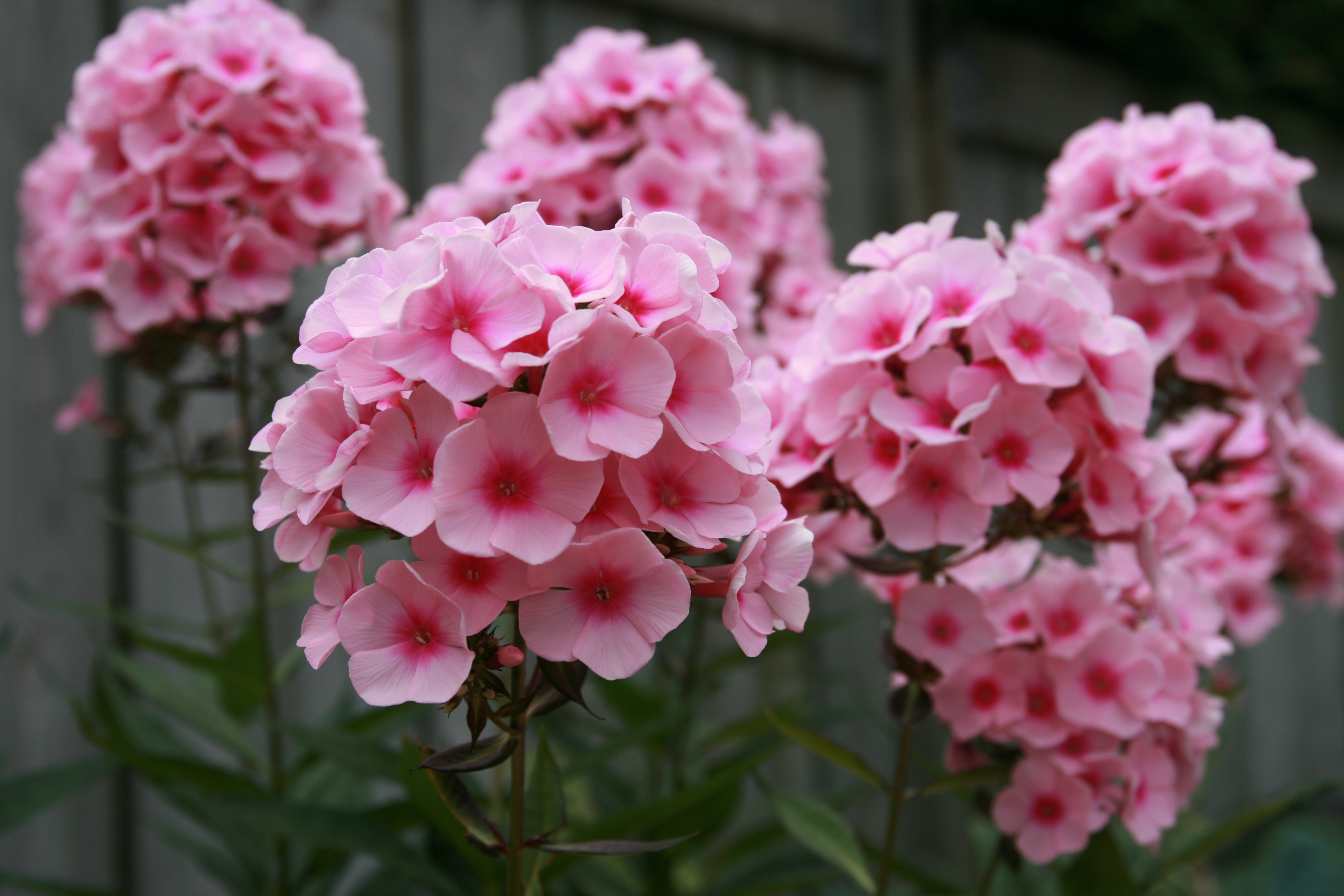


Phlox paniculata, usually called garden or tall phlox, is a clump-forming perennial grown for fragrant summer flowers. It is not a wallflower, and it needs different care from low-growing creeping phlox. Choose the cultivar first, then give it enough moisture and space for healthy growth.
The name ‘Miss Elie’ refers to one cultivar, not another name for the entire species. This guide covers garden phlox generally, with ten steps you can adapt to the plant on your label.
1. Check the identity and mature size
Buy a plant labeled Phlox paniculata or an identified border-phlox cultivar. Check its height, spread and suitability for your local winters and summers. Compact cultivars and tall border plants should not be squeezed into the same spacing plan.
The RHS profile for ‘Miss Elie’ describes an upright perennial with fragrant rose-pink flowers in mid to late summer, reaching roughly 1.1 metres. It lists ‘Elie’ as a synonym. If that is the plant you want, match the nursery label rather than relying on a photograph or the misspelling ‘Miss Ellie’.
2. Find a bright site with room for air movement
Garden phlox generally suits sun or partial shade in moist, well-drained soil. Avoid a spot that dries out severely each summer or remains waterlogged. Light shade may help in a hot location, but deep shade is not a substitute for matching the plant to the site.
Leave space between phlox and neighboring shrubs. Air movement helps foliage dry, although it does not guarantee freedom from disease. Put taller cultivars where they will not hide smaller plants or lean across a path.
3. Prepare the planting area
Remove weeds and check drainage before opening the pot. Improve poor soil with suitable organic matter where needed, working when the soil is neither saturated nor baked hard. There is no need to till every established border simply because a new perennial is being added.
If you are unsure about fertility or pH, use a soil test. Repeated fertilizer applications cannot compensate for a poorly drained root zone or a location with too little light.
4. Plant at the correct depth and spacing
The RHS border-phlox growing guide recommends spring or autumn for container-grown plants and at least 60 centimetres between plants. Use the cultivar’s eventual spread to decide whether more room is needed. Six-inch spacing is too close for ordinary tall border phlox.
Make a hole that accommodates the root ball and set the plant at its existing soil level. Backfill, firm gently and water. Follow the supplier’s instructions for bare-root stock, and delay planting into frozen or saturated ground.
5. Keep the root zone supplied with water
Pay particular attention while a new plant establishes and during dry spells. Check beneath the surface before watering; a dry-looking crust does not always mean the roots are dry. Apply water near the soil rather than routinely soaking the leaves.
Wilting can have several causes. If the soil is already wet, do not automatically add more water. Check drainage and roots, and seek local advice if decline continues.
6. Feed according to need
A plant in reasonably fertile soil does not automatically need fertilizer both at planting and at flowering. The RHS advises spring feeding on poor soils. Follow the product rate and any soil-test recommendation, avoiding concentrated fertilizer against roots or stems.
Keep a record of what you apply. If a plant is leafy but flowers poorly, assess shade, crowding and past feeding rather than assuming it needs a larger dose.
7. Mulch and provide support where needed
Mulch helps conserve moisture and suppress weeds. Spread it over the root area without burying the crown, leaving room to inspect the base of the plant. Replenish as it breaks down rather than piling on a fresh thick layer regardless of what remains.
Tall stems can need support, especially in wind. Set unobtrusive supports in place before stems sprawl and use ties that do not cut into them. Garden phlox is not universally self-supporting.
8. Thin or shorten stems selectively
Do not remove almost every stem from every plant as a routine. A crowded mature clump may benefit from selective thinning, while a small young plant needs time to establish. Inspect the actual plant before deciding how much to remove.
Shortening stems before flowering is an optional way to adjust height and flowering time, not a required disease-prevention treatment. It can delay the display. Leave part of a clump untouched if you want to compare the result in your own conditions.
9. Deadhead and watch for problems
Remove faded flower heads if you want a tidier display and less self-seeding. Smaller later flowers may follow, but a full second display is not guaranteed. Seedlings from a named cultivar may differ from their parent.
NC State Extension identifies powdery mildew, phlox bugs, mites and root problems among possible issues. Inspect affected leaves and stems before choosing treatment. Good care reduces some pressures but does not make a plant immune.
10. Divide crowded clumps and clear old growth
Divide when a clump outgrows its space or loses vigor, rather than treating a fixed anniversary as a deadline. Early spring is a useful time. Replant healthy sections with roots and shoots, water them in and allow space for renewed growth.
Cut down dead stems before the new season’s growth gets in the way. Where disease has been a problem, remove affected debris rather than leaving it around the crown. Label the plant and note its flowering time so you can improve placement or support next year.
Featured image credit: original source.