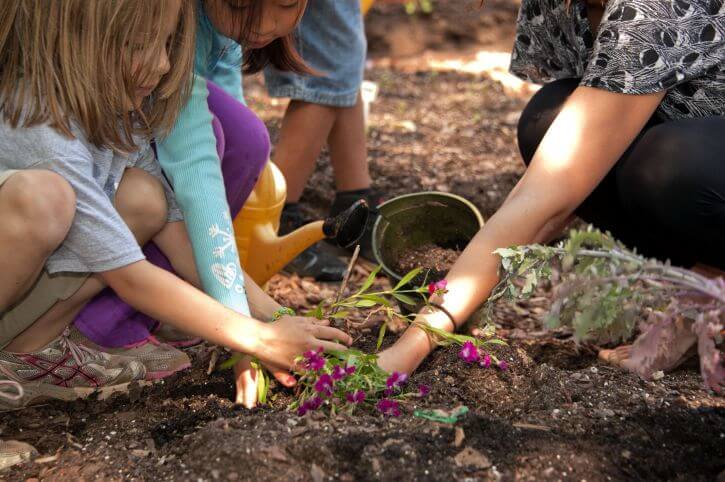
Start gardening with children by choosing one small, reachable growing space and one task you can do together. A pot of a suitable edible plant or a short section of bed is enough. The adult manages safety and ongoing care; the child can help make choices and notice what changes.
The aim is participation, not a perfectly weeded garden. Plan short sessions around the child’s interest, attention and abilities. A child who enjoys watering may be less interested in sowing tiny seeds, and that is a useful starting point rather than a failure.

Set up the space before inviting help
Choose a stable container or bed that can be reached without climbing or leaning dangerously. Check for sharp objects, animal waste and other hazards. If a site’s soil history is uncertain, seek local advice rather than assuming every patch is suitable for food growing or children’s digging.
Store fertilizers, pesticides, sharp tools and power equipment securely. Keep children away from machinery in use. Provide suitable footwear, shade and drinking water, and plan handwashing before eating and after gardening. Penn State’s gardening with young children guidance puts safety and developmentally suitable participation alongside growing activities.
Choose plants together within safe options
Offer a short list of plants that suit the season, light and available space. Let the child choose a flower color or an edible crop they already recognize. Avoid promising a harvest by a particular date; weather, variety and care affect growth.
Adults should identify plants and decide what can be handled or eaten. Teach children to ask before tasting any leaf, berry, seed or flower. Keep treated seed out of children’s hands and follow packaging instructions. Small seeds and decorative stones are not suitable play materials for children who mouth objects.
Teach four useful skills
Planting: show how to make a hole or sow at the packet’s depth, then let the child complete a manageable part. Large, untreated seeds may be easier to handle when age-appropriate, but supervision still matters. Label the crop so nobody has to guess which seedlings were planted.
Watering: start with a small can or container the child can control. Demonstrate checking the growing medium and directing a gentle flow toward it. A watering wand is optional, and a large full can is not a required next step. Explain why a wet pot does not need another drink simply because watering is fun.
Tidying: ask the child to collect a small amount of safe loose debris or point out suspected weeds for adult identification. Show how to move around seedlings without stepping on roots. Avoid races with rakes or tools and do not expect a young child to distinguish every weed from a desirable plant.
Harvesting: an adult confirms the crop and its readiness. Demonstrate gentle picking; adults handle cutting tools unless the child can use an appropriate tool safely with close supervision. Wash food before eating and follow any treatment’s harvest interval.
Give ownership without leaving the whole job to them
Let the child make a large, readable plant label or choose a notebook for drawings and observations. Record a sowing date, count new leaves or compare a photograph each week. Choose marker materials appropriate to the child’s age, avoiding sharp edges and small loose pieces.
The adult should check watering and plant health between sessions. If seedlings fail, look at the conditions together and try again when practical. Avoid treating a lost plant as evidence that the child was careless; gardening includes uncertainty.
Keep pest control an adult responsibility
Identify a problem before treating it and keep children away from applications and stored products. Follow label instructions for re-entry and harvest, even when a product is described as natural or organic. The EPA’s garden-label guidance explains why the label matters.
If you want playful ways to use these skills, see our gardening games and activities for children. Keep games optional and stop while the experience is still enjoyable.
Image Source: here.