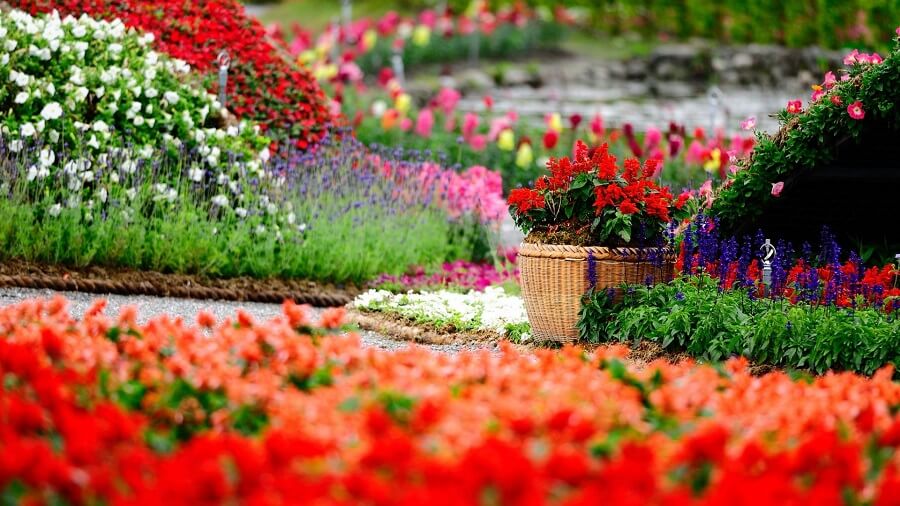
These ten flower-garden layouts can be adapted to small or large spaces. Choose plants for the actual light, soil, climate and mature size before copying a photograph. Keep paths usable and separate decorative ideas from structural work that needs a proper design.
1. A colorful corner

A corner bed can use a modest space, but it still needs room for mature plants and access to the building. Keep soil and irrigation clear of vulnerable siding and vents. Group plants with compatible needs and choose colors you enjoy. Low edging should be stable and free of sharp projections.
2. A spilling jug

Lay an ornamental jug securely on its side and arrange a trail of low plants to suggest a spill. White flowers create a milk-like effect, while other colors suggest a stream. The effect depends on flowering season and plant spread; choose a location where the jug will not roll or block a path.
3. A woodland path

Design a firm, stable route through suitable shade planting. Do not raise soil over existing tree roots simply to create a woodland appearance. Path foundations and drainage depend on the site. Add a bench designed for seating rather than balancing logs into an unassessed structure.
4. A climbing garden

Use a purpose-designed trellis or securely mounted support for suitable climbing plants. An old ladder leaned against a wall is not automatically a safe or durable support. Consider the mature plant’s weight, attachment method and maintenance access, including how the support interacts with the building.
5. A group of pots

Containers can create a garden on paving. Choose enough root space and drainage for each plant, and plan where water will go. Larger pots still need suitable plants; they do not remove all size limitations. Keep access routes clear and consider the loaded weight on balconies or raised structures.
6. A gravel seating corner

A gravel area can frame seating and planting, but the surface must suit the users and furniture. Loose gravel may be awkward for wheels or narrow chair legs. Plan drainage and stable edging. Leave a practical route in and out rather than surrounding a seat with planting that blocks access.
7. A flower arch

An arch can mark an entrance or frame a view. Use a structure and anchors designed for the mature climber and expected weather. Roses and other climbers differ in size and training needs. Keep headroom and walking width clear; connecting arches into a tunnel increases the structural and maintenance demands.
8. Planting between paving

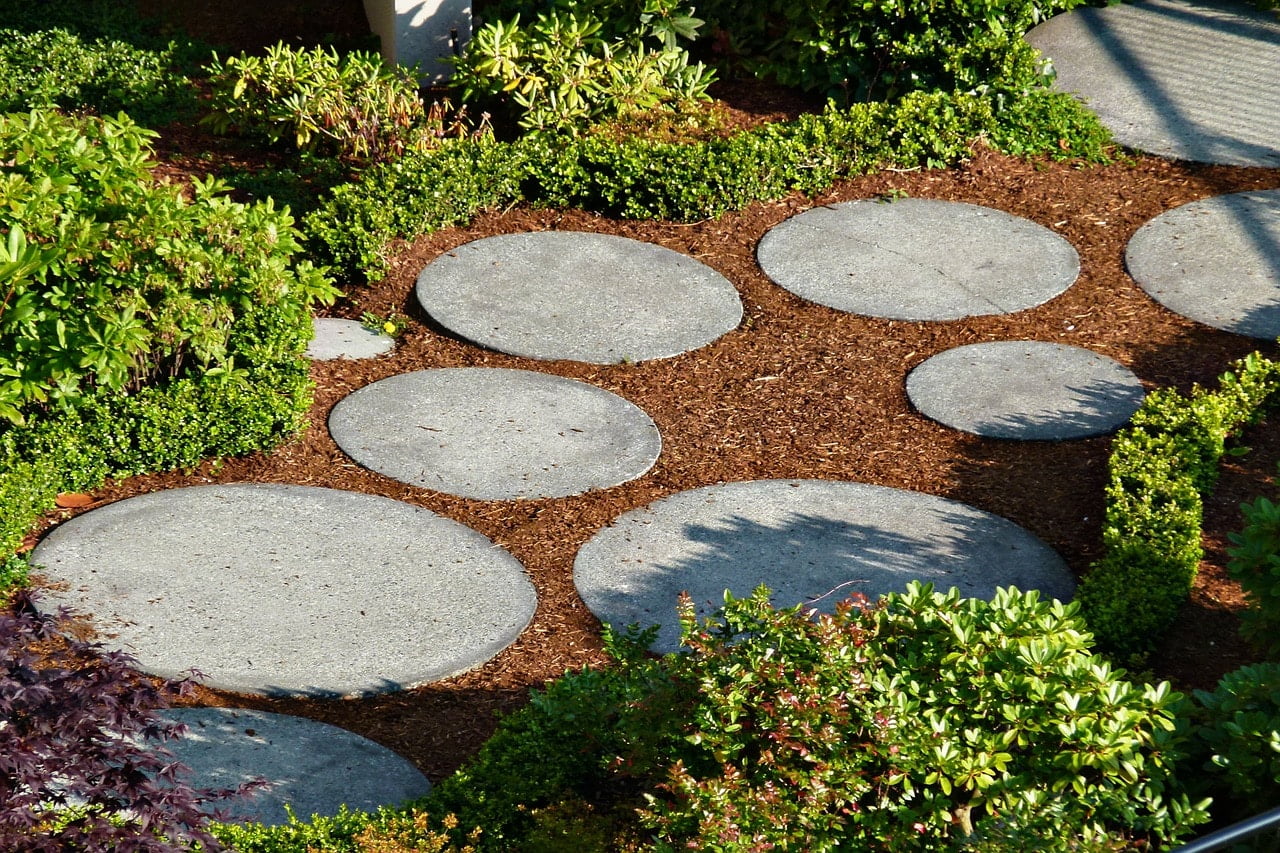
Low plants can soften suitable gaps in paving, but choose species that tolerate the light, root space and expected foot traffic. Preserve the stability and drainage of the paving. Do not open joints or encourage growth where it creates uneven footing on an important walking route.
9. Planting beneath a tree

Work with the tree’s shade and root competition. Avoid piling soil or gravel against its trunk, cutting substantial roots or changing the grade to form a new bed. Use small plants where planting is appropriate and seek arborist advice if excavation is needed. Do not hang heavy wet planters from an unassessed branch.
10. Wheelbarrow planters

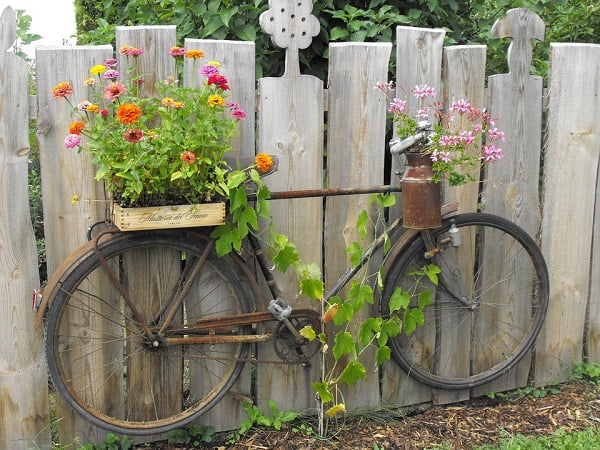
An old wheelbarrow can become an ornamental container if it is stable, clean and free of sharp edges or harmful residues. Provide drainage or use removable inner pots. Secure its position before filling it, and account for the weight of wet growing medium. Choose plants that fit the available root space.
Plan for regular use
Sketch the layout and measure paths before buying plants or materials. For limited spaces, see small-backyard landscaping ideas; for container arrangements, see wheelbarrow planter ideas. Start with one area and adjust it as the plants mature.