Choose outdoor lighting by the job it needs to do: help someone find the door, reveal a step, make a table usable or show activity near an entrance. Start with those tasks before choosing decorative fixtures. More brightness is not always better, especially when it creates glare or shines into neighboring homes.
Entryway lights
Wall-mounted fixtures can illuminate the lock, doorbell and immediate standing area. Position them so the light helps someone approaching rather than shining directly into their eyes.
A hanging fixture can suit a sheltered entrance with adequate clearance and an appropriate mounting point. Check the product’s permitted exposure and installation requirements; not every pendant is intended for wind or rain. Choose by the site conditions as well as its appearance.
Walkway and step lighting
Low path lights can mark edges and changes in level. You do not necessarily need matching rows on both sides: test whether the important surfaces are visible without a distracting runway effect.
Post lights cover a different area and may produce more spill. Consider where the beam lands, not just how attractive the fixture looks in daylight. Keep fittings out of walking routes and landscaping maintenance paths.
Patio and deck lighting
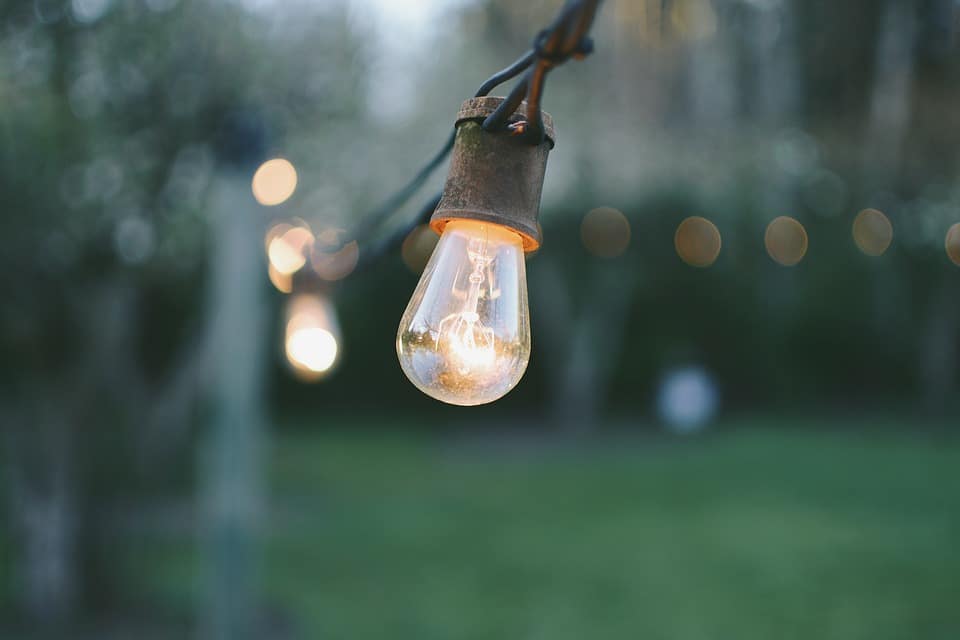
Use a comfortable light near the table or seating area, with brighter task lighting only where needed. Outdoor-rated string lights can provide decoration, but should not be the only illumination for an awkward step or exit.
A fan with a light may suit a covered porch if the model is rated for that location and the structure supports it. A portable battery lantern can be easier to move than a permanent fixture. Avoid open-flame lanterns near fabric or crowded seating.
Motion lighting and visibility
A motion sensor can switch useful light on when someone approaches. Aim and adjust it so it detects the intended area without repeatedly responding to street traffic or shining into a neighbor’s window.
No light guarantees that intruders will leave or replaces locks and other security measures. Assess visibility from inside the home and at the entrance. Intense glare can make it harder to see beyond the bright area.
Limit spill and unnecessary operation
DarkSky and the Illuminating Engineering Society’s five principles call for useful, targeted, restrained, controlled and warmer-colored light. Shield fixtures where needed and aim light downward. Use timers, sensors or dimming compatible with the equipment.
Walk the property boundary after dark to see what neighbors see. Turn off decorative lighting when it is no longer being enjoyed, and consider sensitive wildlife areas when deciding whether lighting is necessary at all.
Check ratings and installation
Select fixtures rated for the actual damp or wet exposure. Follow the manufacturer’s limits for strings, connectors and power supplies. Keep cables out of paths and away from sharp edges; do not use temporary extension wiring as a substitute for a permanent installation.
CPSC’s home electrical safety checklist addresses GFCI protection for outdoor outlets. Have a qualified electrician confirm the circuit, weather protection and local requirements when adding or changing wired lighting.
Before buying a full set, trial the placement with a suitable temporary light or one fixture. Compare current total costs, including installation, controls and replacement lamps, and choose a setup you can maintain safely.