Check the insects before treating a tomato plant for aphids. Small colonies do not always require a pesticide, especially when natural enemies are present and the plant is growing well. Monitor the plant, use suitable physical controls where needed and reserve a labeled product for a problem that warrants it.
Confirm the infestation
Look closely at tender shoots and the undersides of leaves for groups of small, soft-bodied insects. Sticky honeydew and distorted growth can support the diagnosis, but a yellow leaf alone does not prove aphids are responsible. Use a hand lens or ask a local extension service if identification is uncertain.
Inspect more than one part of the plant and check again over time. Record whether numbers are rising and whether new growth is being damaged. Look for predators and parasitized aphids before deciding that every insect must be removed.
Start with monitoring and physical control
On a sturdy plant, a directed stream of water can dislodge aphids. Support delicate growth and avoid pressure that damages leaves or stems. Reinspect afterward; one treatment is not a guarantee against another colony.
For a small accessible group, careful removal may be practical. Avoid stripping large amounts of healthy foliage just to remove a few insects. The plant’s condition and the scale of the infestation should guide the response.
Protect useful insects
Lady beetles, lacewings and other natural enemies can help suppress aphids. Avoid indiscriminate spraying that also kills them. Check for ants tending aphid colonies and seek appropriate management if they interfere with biological control.
The UC IPM aphid guide explains monitoring, natural enemies and treatment options. It also cautions that controlling aphids does not reliably prevent every aphid-transmitted virus. Suspected virus symptoms need a separate diagnosis.
Use a suitable labeled product when needed
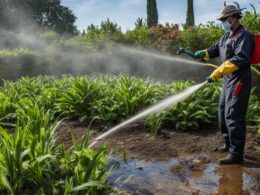
If treatment is justified, choose a product labeled for aphids on the intended edible crop. Follow the rate, coverage, timing, plant-sensitivity, protective-equipment and harvest instructions. Insecticidal soaps and horticultural oils have specific uses and limits; “organic” does not mean they cannot harm plants or beneficial insects.
Do not substitute household dish detergent for a formulated insecticidal soap. Ingredients and concentrations differ. Penn State’s warning about pesticide home remedies explains why household mixtures should not be assumed safe on plants.
Neem products also differ in formulation and active ingredients. Use the actual label rather than assuming every product works in the same way or can be applied under any conditions.
Reduce avoidable stress and keep checking
Maintain appropriate water and nutrition, and avoid excess feeding in response to aphid damage. See our tomato fertilizer guide for choosing feed based on the growing medium.
Marigolds or mint beside a tomato plant do not guarantee an aphid-free crop. Recheck the plant after any action and judge success by reduced damaging populations and healthy growth, not by a promise of permanent eradication.