Choose Achillea companions that suit the same light, drainage and available space as your yarrow. Suitable ornamental sages, coneflowers and low-growing dry-garden herbs can be candidates, but the exact species and cultivar matter. A companion list is not a guarantee of pest control or stronger growth.
Identify the yarrow before planning around it
Achillea is a genus with different species and garden hybrids. Do not describe every ornamental yarrow as a North American native or assume all selections stop at two feet tall. Check the label, mature dimensions and regional suitability.
The NC State profile for Achillea millefolium describes its preference for sun and draining soil, its spreading habit and cautions including skin irritation. That is useful context for a bed, but not a substitute for the requirements of a different Achillea selection.
Compare candidates by their growing needs
- Ornamental sage: a named plant such as Salvia nemorosa can provide upright flower spikes alongside yarrow’s flatter clusters. Check mature spread and flowering season.
- Coneflower: investigate a species or cultivar suited to your climate and soil. Allow enough space that spreading yarrow does not crowd the crown.
- Thyme, culinary sage or lavender: consider these for appropriately sunny, freely draining conditions. Compare winter hardiness and mature size rather than treating all herbs as identical.
- Stonecrops: select a known low or upright form for the role you need; the shared common name covers very different plants.
These are possibilities to evaluate, not a recipe requiring all of them in one bed. Draw their mature outlines before buying. A contrasting leaf or flower shape is useful only if both plants can grow well in the assigned space.
Be cautious about wetter companions and shrubs
Bee balm, hydrangeas and many other ornamentals cannot all be assigned “minimal water” as a group. Their needs vary. If a plant needs a moister root zone, give it a separate position or irrigation area rather than repeatedly soaking a dry-growing yarrow planting.
Weigela or another shrub can form a background, but allow for its eventual shade and roots. A small shrub in a nursery pot may later cover the yarrow. Position plants so pruning and division remain accessible.
Hostas and many shade-garden plants generally call for a different planting plan. However, avoid declaring every coral bell or every hydrangea universally incompatible: check the specific selection and site instead.
Use flowers near vegetables without yield promises
Flowering plants can provide resources for visiting insects. That does not establish that yarrow directly improves every nearby crop or prevents a particular pest. University of Minnesota’s companion-planting guide distinguishes useful practices from unsupported pairings.
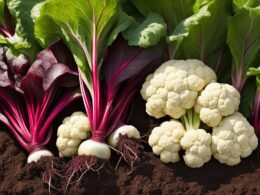
Cabbage leaves, broccoli heads and cauliflower curds are normally harvested before the crop’s seed-producing stage. Do not promise a larger harvest of those parts merely because more pollinators visit nearby yarrow. Keep vegetable watering, crop rotation and access workable in their own right.
Plan containers for growth, not just the first photograph
Choose a draining container large enough for the selected plants at maturity. Separate pots often make it easier to manage a spreading yarrow and a woody herb than a crowded permanent combination.
Check container moisture directly. A weekly watering rule may be too much in cool weather or too little in a small exposed pot. Drought tolerance after establishment does not excuse neglecting a newly planted root ball.
Review the planting each season. Remove unwanted spread, replace poorly matched plants and preserve room for maintenance. Successful companionship is visible in plants that fit the site and each other over time, not in a promised list of automatic benefits.