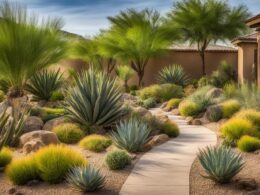
Mulch can reduce soil-surface evaporation and suppress some weeds in a xeriscape, but the material and depth need to suit the plants and site. Seasonal maintenance means inspecting what is already there, not automatically adding another layer every spring and fall.
Start with the purpose: moisture conservation, soil cover, plant-crown drainage or appearance. A water-wise garden can contain organic or mineral mulch; neither is right for every planting.
Match the material to the plants
Wood chips and other organic materials break down over time and may suit many tree, shrub and perennial beds. Gravel can suit some dry-adapted plantings, particularly where wet material around crowns would be undesirable. Consider heat, exposure, future planting work and how easily the material can be maintained.
Colorado State’s mulch guide discusses material selection and the effects of mulch on soil and heat. Its regional examples should inform a site-specific choice rather than become a universal instruction to cover every xeriscape in rock.
Apply over a prepared surface
Identify and address established weeds first. Mulch is not a dependable cure for a deep-rooted perennial infestation. Check the existing layer before adding material, and keep stems, trunks and crowns appropriately clear. A thick mound against a plant is not extra protection.
Do not assume landscape fabric is required beneath every permanent planting. Consider roots, water movement, future division or replanting and the possibility of weeds rooting in debris above it. The CSU xeriscape retrofit guide explains why mulch choice should reflect the planting and why routine weed fabric is not necessary.
Spring: inspect before topping up
Look for bare areas, displaced material and crowns that have become buried. Remove emerging weeds while manageable and restore coverage only where needed. Check irrigation lines and emitters before vigorous growth begins.
If a bed has stayed unusually wet, investigate drainage and the material around sensitive plants. Do not respond by adding a thick moisture-retaining layer. Equally, do not strip useful mulch from the whole bed just because a few patches need correction.
Summer: check moisture below the cover
Mulched soil still needs inspection. Verify that irrigation reaches the root area rather than relying on the surface appearance. Newly installed plants need establishment water even if the eventual garden is designed for lower use.
Inspect for leaks and uneven wetting, and adjust irrigation to conditions and local restrictions. Mulch cannot compensate for a failed emitter or make all plants share one watering schedule. Keep plants with different needs in appropriately managed areas.
Autumn and winter: preserve function
Clear paths, drains and access points of displaced material. Decide whether fallen leaves can remain as suitable cover or need removal from crowns and places where they mat. Check wind-prone and sloping areas after storms.
In cold climates, follow regional guidance for winter protection rather than assuming all xeric plants need the same treatment. In mild climates, continue checking moisture and weed growth during the rainy or active season. Seasonal names do not establish the same conditions everywhere.
Avoid unrelated soil fixes
Mulching is surface management; changing the soil is a separate decision. Do not automatically mix sand, gravel, compost or manure into every planting hole. Test and assess the soil and the needs of the selected plants before amending. Some dry-adapted plants do poorly in an overly rich, moisture-retentive bed.
Native does not automatically mean drought tolerant, and drought tolerant does not mean maintenance free. Keep useful existing plants and select additions for actual site conditions. Use the separate seasonal-color planning guide when the question is flowering sequence rather than mulch care.
Keep a simple maintenance record
Record the mulch material, where it was applied and any areas that dry out, stay wet or lose cover. Check those locations after weather changes. Replenish based on condition and appropriate coverage; a consistent inspection routine is more useful than promising a permanently weed-free garden.