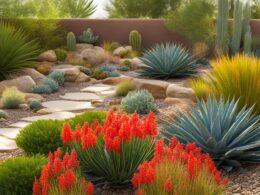
Start xeriscaping with one manageable area and a plan for plants, soil, irrigation and maintenance. The aim is a landscape suited to the available water and local conditions. It can include flowers, shrubs, trees and useful lawn space; it does not have to become a yard of rocks.
Map what the yard needs to do
Mark paths, seating, play space, existing trees and areas you actually use. Note sun and shade at different times, slopes, drainage and irrigation coverage. Preserve useful established features rather than clearing the yard before deciding what will replace them.
Choose a first project with a clear boundary, such as an awkward strip of lawn or an overwatered planting bed. Keep the work small enough that you can remove weeds, establish plants and monitor irrigation properly. A phased project also shows you what works before you repeat it.
Check soil and choose plants together
Assess drainage and get appropriate soil testing where needed. Do not add a standard amount of compost to every bed without considering the plants and existing soil. Some dryland plants need lean, well-drained conditions; others benefit from a different approach.
Colorado State Extension’s retrofit guide describes planning, plant selection, irrigation and maintenance as connected parts of xeriscaping. Use guidance for your region rather than copying a plant list from a different climate.
Check mature size, winter hardiness, sun and moisture needs before buying. Group plants that can share irrigation. A plant labeled native or drought tolerant still needs a suitable site and care while establishing.
Four beginner projects to consider
- A mulched planting bed: replace a small difficult lawn edge with suitable plants and a mulch appropriate to them. Keep material away from trunks and crowns.
- A groundcover area: choose a locally suitable species, allowing for foot traffic and spread. Do not assume all groundcovers need the same water.
- A clear path: place a durable route where people already walk so repeated trampling does not defeat the planting.
- A planted rock garden: use stone with appropriate plants and drainage, considering reflected heat rather than filling the whole space with rock.
Sketch the mature arrangement before shopping. Small nursery plants leave gaps at first; filling every gap with another shrub can create crowding later. Temporary open space is easier to manage than removing oversized plants.
Adapt irrigation before removing lawn
Work out how remaining trees, shrubs and any retained lawn will receive water. A tree that previously benefited from lawn irrigation can be affected when that irrigation disappears. Drip may suit some beds, but emitter placement, soil and plant needs still require attention.
Check moisture during establishment and adjust as roots develop. Inspect leaks and runoff. Low-water landscaping is not a reason to ignore plants during a hot spell, nor does it establish a universal watering interval.
A Salt Lake City starting point
For a Salt Lake City project, consult Public Utilities’ conservation resources and the applicable landscape rules before starting. Local plant guidance and any current incentive conditions can affect the design and timing. Confirm eligibility before spending money; a program mentioned in an older article may have different terms now.
Outside that service area, use your own water utility and Extension resources. The transferable lesson is to check locally, not to apply Salt Lake City’s rules everywhere.
Budget for establishment and maintenance
Include removal, plants, irrigation changes, mulch and your time. Weed early, replace plants that clearly do not fit, and keep a record of watering and seasonal performance. Savings depend on the starting landscape and management; do not plan around a promised percentage.
Finish and assess the first section before expanding. A garden that you can establish and maintain is a better starting point than a large conversion left half planted and difficult to water.