Patio pavers and outdoor floor tiles can change how a garden looks and feels, but they are not interchangeable. A masonry patio is a constructed surface with a suitable base and drainage. Many wood, plastic and rubber products are coverings intended for an existing surface.
Start by identifying what you already have and what the new surface must do. A route used by a wheelchair, a dining patio and a decorative stepping-stone path have different needs. The four material examples and four design ideas below help frame that choice.
Four material options to compare
1. Stone-look resin stepping pads
The original “rock paver patio stones” example was a lightweight resin product, not quarried stone. A stone-like finish can be attractive, but appearance does not establish its load rating or installation method.
Check whether the exact product is intended for a garden path, a prepared patio surface or another use. Do not assume that placing lightweight pads on soil creates a stable base for furniture, a grill or heavy equipment. Test the planned route for rocking, exposed edges and awkward steps before treating it as a finished walking surface.
2. Interlocking wood deck tiles
Wood tiles can create a warm-looking overlay on a suitable patio or balcony. Check the timber species, finish and maintenance instructions instead of assuming every wood-look tile is teak. The backing and connector system also matter.
Click-together construction does not correct an uneven base. As a manufacturer example, IKEA specifies hard, even surfaces for RUNNEN decking. That is not an installation approval for every other tile, but it illustrates why the underlying surface must be checked. Confirm door clearance and keep drainage paths open.
3. Plastic outdoor tiles
Plastic tiles may be light and easy to separate for cleaning. Their suitability still depends on the particular material, connectors, support surface and exposure. “Weatherproof” should not be read as a guarantee against all sun damage, movement, freezing conditions or wear.
Openings or grooves let water pass through only if it has somewhere to go beneath them. Tiles will not cure a patio that already drains toward the building or holds puddles. Check wet-surface traction, edge transitions and the permitted furniture loads before covering a large area.
4. Rubberific rubber pavers
Rubber pavers provide a different feel underfoot from masonry. The manufacturer’s Rubberific instructions describe preparing a clean, dry surface and using the specified attachment method. These products should not be treated as loose structural building blocks.
Follow the current instructions for the precise product, including adhesive compatibility and the time before use. A claim about resistance to freezing or cracking does not mean ice cannot form on top. Keep the surface and drainage maintained, and check suitability around heat sources.
Four paving ideas for the garden
1. Create a pattern with compatible shapes

A border, a change in laying direction or a small feature panel can add interest without using many competing colors. Sketch the layout to scale and work from the actual product dimensions. Include joints, edges and cuts in the calculation.
Mixing materials also means checking thickness and installation requirements. Products that look good side by side may need different bases or movement allowances. Keep the finished walking surface consistent and leave complicated cuts or construction details to a suitable installer.
2. Make a planted or gravel-lined path

A gently curving route can connect a door to a seating area, with planting softening the sides. Place stepping pads where a person naturally walks rather than spacing them only for a photograph. Keep each piece stable and clear of overgrown edges.
Wide gaps, loose gravel and uneven stones may be unsuitable for wheeled access or someone who needs secure footing. Where access matters, choose a continuous, even route instead. Ground-cover plants should suit the light and foot traffic and should not hide changes in level.
3. Coordinate paving with steps

Using a related color or finish on a stair can make the design feel connected. The stair itself still needs properly designed dimensions, sound construction, drainage and a suitable walking surface. Adding tiles can change step heights and create an uneven riser.
Do not improvise steps by stacking loose pavers. Have a qualified installer assess the existing structure and applicable requirements. Choose products approved for the intended stair application, including edges and attachment.
4. Define a seating area

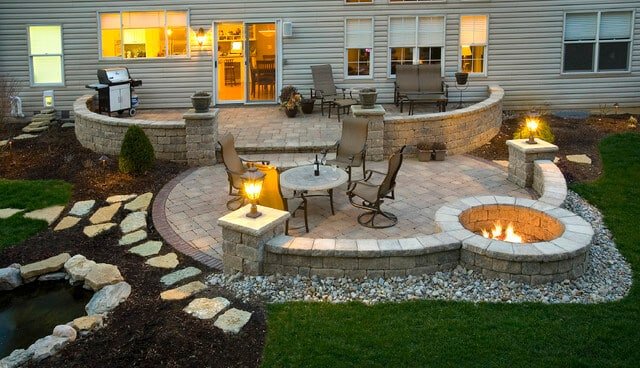
A contrasting paving border can mark a dining or lounge zone without building a wall. Lay out the furniture first, allowing chairs to pull back while all feet remain on a stable surface. Check the walking route when the area is occupied.
A curved built-in bench or raised edge can be attractive, but it is a separate construction project. A photograph of a paved seat is not a plan for retaining soil or supporting people. Use a suitable design and construction method, then choose a compatible facing material.
Check the whole installation before ordering
Confirm the area, product coverage, waste allowance and edge pieces. Inspect the existing surface and identify drainage problems before hiding them beneath tiles. For a new masonry patio, have the base, edging and drainage specified for the ground and intended use; a decorative overlay guide cannot supply those structural details.
Look at samples outdoors and assess how the finish feels when wet. Compare cleaning, repair and replacement options. Leave access to drains and services, and make sure the finished height will not obstruct doors or drainage openings.
The useful choice is the one that fits the actual surface and activity. Settle that first, then use color, planting and pattern to make the patio your own.
Featured image credit: original source.