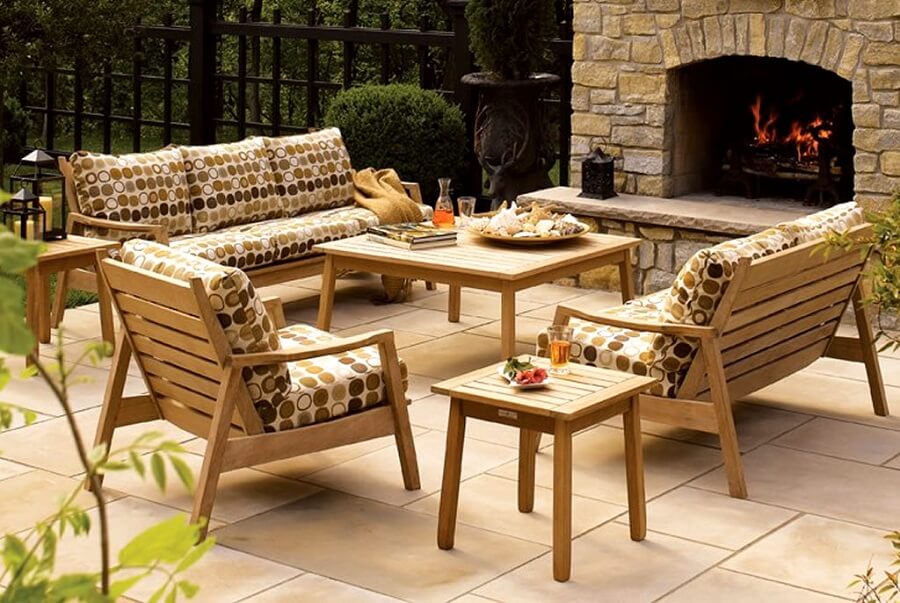
Teak can be a durable and attractive choice for outdoor furniture, but the quality of the wood, joints, hardware and care all matter. A teak label does not guarantee a century of service or immunity to storms, cracking, insects or stains. Compare the complete item and its maintenance instructions before paying a premium.
What you are choosing
New teak often has a warm brown appearance and can weather toward silver-gray outdoors. Decide whether you like that change or want to maintain a more uniform color. Surface color and structural condition are different questions: inspect joints, legs and fasteners as well as the finish.
Wood does not rust; metal components may corrode or leave staining depending on their material and exposure. Natural durability does not make the entire chair or table indestructible. Secure or store furniture as appropriate for severe weather and follow the maker’s advice for your location.
Cleaning without creating more work
Identify whether the furniture is unfinished, oiled, sealed or otherwise coated before using a cleaner. Start with the maker’s instructions and test any approved product in a discreet area. Remove loose debris and avoid aggressive methods that could damage the surface or existing finish. Let furniture dry properly before covering or applying another treatment.
Our outdoor furniture cleaning guide covers general care; teak-specific instructions and product labels take precedence for the item you own. Do not mix cleaning products or assume that a cleaner also preserves the original color.

Oil and sealers are choices, not universal rules
It is too broad to say every manufacturer rejects teak oil or that all sealers are water-based and harmless. Barlow Tyrie’s care range, for example, includes separate cleaners, oil, color guard and stain guard products. Different jobs call for different products.
The manufacturer’s teak-oil instructions warn against application over accumulated dirt or oil. This is a product-specific example, not an instruction to oil every piece of teak furniture. Check compatibility and preparation requirements before treating yours.
Follow the selected product’s ventilation, protective equipment, drying and waste-disposal instructions, including those for oily rags. A yearly schedule may suit one product but should not be generalized to every sealer or exposure. Ask the furniture maker if the existing finish is unknown.
Three furniture layouts to compare
A full conversation set
A sofa, chairs and tables can define a seating area. Measure circulation space with people seated, and check seat heights, cushion storage and the delivery route. Confirm exactly which pieces are included. Older photographs of a six-piece “Monaco” set do not establish current availability, certification or warranty.
A standalone bench
A bench is a smaller commitment than a whole suite. Try the back angle and seat depth if possible, inspect assembly requirements and choose a stable location. Verify load limits and maintenance instructions for the exact bench. Do not use a past Amazonia listing price as a current budget.
A compact lounge arrangement
Two chairs, a side table and an ottoman can work where a sofa would crowd the patio. Consider whether the ottoman is rated for sitting and whether cushions are suitable for your exposure. Compare actual dimensions rather than relying on the proportions in a photograph.
Questions to settle before ordering
Ask what wood and finish are supplied, how the joints are constructed, which hardware is used and what assembly is required. If responsible sourcing is part of the sales claim, request documentation for that product. Read the current warranty’s exclusions and care conditions. Budget for covers or storage where appropriate, and choose a maintenance routine you can sustain.