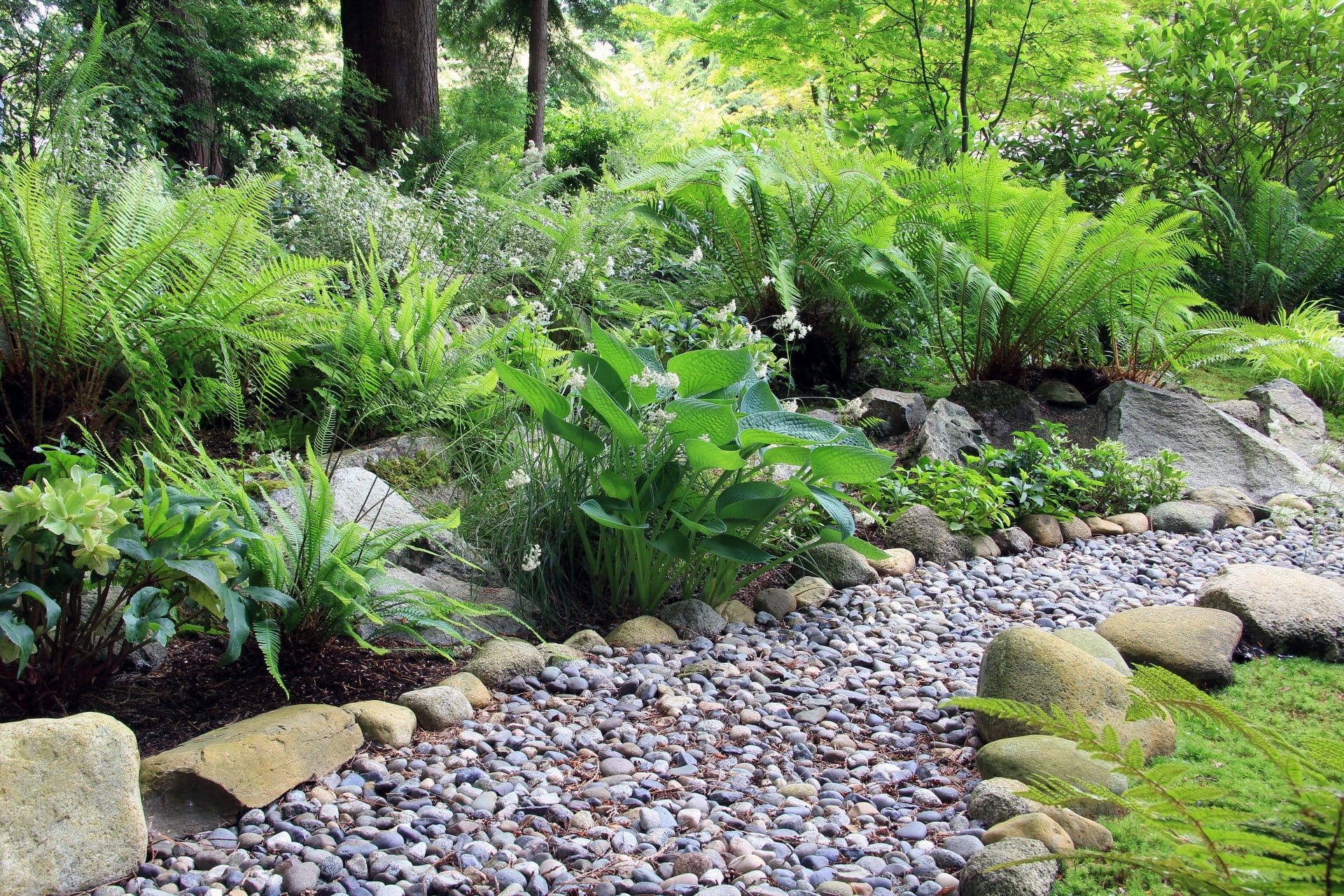
A rock garden combines stones with planting pockets to create a landscape feature. It can be a small bed, a collection of alpine plants, or a larger arrangement with paths and boulders. Start small enough to build and maintain comfortably, and choose a design that fits your climate and soil.
Decide what you want the garden to do
A classic planted rockery is different from a gravel courtyard or a Japanese-inspired dry garden. A water feature is a separate addition with its own plumbing and maintenance. Choose the main purpose before ordering stone: displaying plants, framing a path, reducing a difficult mowing area, or creating a focal point.
Sketch the bed, viewing points, access route, and mature plant sizes. A garden hose laid on the ground helps you test curved edges. Leave enough room to reach plants for weeding without climbing over unstable rocks.
Check the site and drainage
Observe sunlight and where rain collects. Many alpine plants need excellent drainage, but not every garden containing rocks has to be a dry succulent bed. Match the planting conditions to the species you want.
Remove weeds and competing vegetation in the bed while preserving desirable plants and nearby tree roots. Arrange utility locating before digging. Avoid changing drainage toward a house or neighboring property. A retaining wall or a major slope project requires more planning than a decorative rockery.
Select rocks you can place safely
Compare local landscape suppliers, quarries, and suitable salvaged stone. A mix of sizes looks more natural than identical stones placed at equal intervals. Check delivery charges, access, and the equipment needed to move the largest pieces.
The Royal Horticultural Society’s rock-garden guidance recommends planning around the site’s microclimate, choosing a range of stones, and setting them firmly. Large projects may need a professional landscaper. Do not attempt to lift a boulder by hand simply because the rest of the bed is a DIY project.
Build the structure before planting
- Mark the outline. Confirm paths and access while the bed is still empty.
- Prepare a stable base. Address the site’s drainage and the support needed for the stones.
- Position the largest stones first. Set them securely so they cannot rock or roll, then arrange smaller stones around them.
- Create planting pockets. Leave adequate root space and use soil or a growing mix appropriate to the plants.
- Test the arrangement. Check stability and walking surfaces before adding delicate plants.
Adding a little sand to heavy clay is not a universal drainage fix. Likewise, blanket layers of landscape fabric are not essential beneath a planted rock garden. Choose a construction method for the soil, planting, and drainage you actually have.
Choose and arrange plants
Dry, sunny sites may suit hardy succulents or drought-tolerant perennials. A cooler alpine planting needs species adapted to local summer heat and winter conditions. For shadier locations, select plants that tolerate that shade rather than assuming cacti or sun-loving flowers will adapt.
Check mature spread and keep taller plants from overwhelming smaller ones. Place plants in their pots first to preview the layout. Remove each pot, inspect the roots, and plant at the appropriate depth. Keep gravel or mulch away from the crown where it could trap moisture.
Avoid putting fresh manure or an arbitrary fertilizer dose into every planting hole. Use soil-test and plant-specific advice. Water new plantings during establishment even when the mature plants are drought tolerant.
Add paths and optional features
Stable stepping stones or a defined path can make maintenance easier. Use a consistent palette of stone and avoid loose gravel where it could create a slipping problem. A bench can provide a viewing point without taking over a small bed.
If you want a stream, pond, or waterfall, plan electricity, water circulation, child safety, and winter care as a separate project. The sound of moving water can be appealing, but it adds upkeep rather than making the garden maintenance-free.
Maintain the finished garden
Pull weeds before they become established, remove debris from planting pockets, and check stone stability after severe weather. Replace plants that outgrow their spaces. A good rock garden can need less mowing, but it still needs weeding, watering checks, and seasonal attention.
Compare the main layout options
A small level bed, a planted slope and a rock-edged flowerbed need different preparation. Choose the layout that works with the existing land and leaves room to reach the plants. Do not turn a decorative rockery into a retaining-wall project without suitable design and drainage advice.
Stone can store heat in sunny locations, and loose gravel is not an appropriate walking surface everywhere. Test access and the view before committing to the materials. For visual inspiration, see three rock-garden ideas; for lower-water planting, use the xeriscape rock-garden guide.