You can grow garlic in pots indoors for edible green leaves. Producing a mature, divided bulb is a different and more demanding project: variety, cold exposure, light and season all matter. A warm kitchen windowsill does not guarantee full bulbs eight or nine months after planting.
Decide whether you want greens or bulbs
For a small indoor project, start with greens and treat the crop as a modest fresh ingredient rather than a replacement for all the garlic you buy. Snipping foliage and maximizing bulb development are different goals. Label separate pots if you want to compare them.
For bulbs, choose planting garlic suited to your climate and follow the supplier’s seasonal instructions. Many varieties need a period of cold for good bulb development. The RHS garlic guide discusses this requirement and container growing. Moving a pot indoors does not remove those needs.
Choose cloves and a draining container
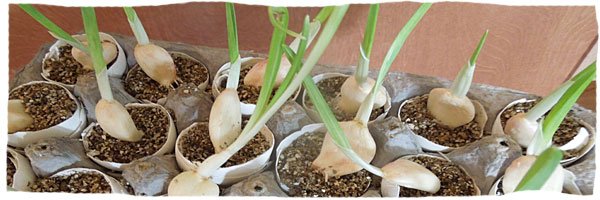
Use sound, identified garlic cloves without mold or soft areas. Separate the bulb into individual cloves shortly before planting, keeping the papery covering intact. Plant each clove separately; do not bury a whole head and expect well-spaced plants.
Choose a stable pot with drainage holes and a tray to catch runoff. A container about six inches deep can serve a short greens experiment, while a bulb crop needs more root space and wider spacing according to the variety. Avoid containers that previously held chemicals or other unsuitable materials.
Use a commercial container potting mix rather than a heavy garden-soil mixture. There is no need to improvise equal parts peat, compost, perlite and builders’ sand. Fill most of the pot with mix, leaving watering space at the rim; do not plant halfway down the container and bury the cloves under the remaining half.
Plant and provide light
For a small greens pot, set cloves upright with the root end down and the pointed end near the surface, lightly covered with mix. Leave space between them so you can inspect each plant. Water gently and let excess drain. Empty the tray rather than leaving the pot standing in water.
Place the pot in a bright growing position. If shoots become pale and stretched, reassess the light rather than assuming more fertilizer will fix them. A suitable grow light may be needed; use its instructions for placement and operating time and keep electrical equipment clear of runoff.
Rotate a windowsill pot as needed for even growth and keep it away from cold glass or a hot air vent. Note the planting date, clove source and conditions so the next pot can benefit from what you learn.
Water according to the mix
Check moisture instead of watering on a fixed daily schedule. Water when the surface begins to dry, allowing drainage afterward. Persistent sogginess, a sour smell or soft cloves call for correcting the moisture problem and discarding rotting material.
A thick outdoor-style mulch is unnecessary for this small indoor project and can obscure the surface you need to inspect. If using fertilizer, follow directions for edible container plants and account for nutrients already present in the mix. More fertilizer cannot compensate for inadequate light.
Harvest leaves and recognize scapes
Once healthy leaves are long enough to use, snip a modest amount with clean scissors, leaving growth on the plant. Wash the harvest before cooking. Expect a limited crop from each clove; declining regrowth is a reason to start another pot rather than promise an endless supply.
Leaves are not the same as scapes. A scape is a flower stalk produced by hardneck garlic under suitable growing conditions, not the inevitable next stage of every indoor green shoot. Illinois Extension’s garlic planting guide explains clove planting and the differences between garlic types.
If you continue toward bulbs
Keep the leaves available to support growth and follow a variety-specific plan for cold exposure, light and harvest. An outdoor container may be more practical if you have a suitable location. Introduce indoor-grown plants gradually to outdoor conditions. Judge harvest from the plant and local guidance, not a guaranteed number of months; dry and cure mature bulbs appropriately before storage.
Featured image source: original credit.