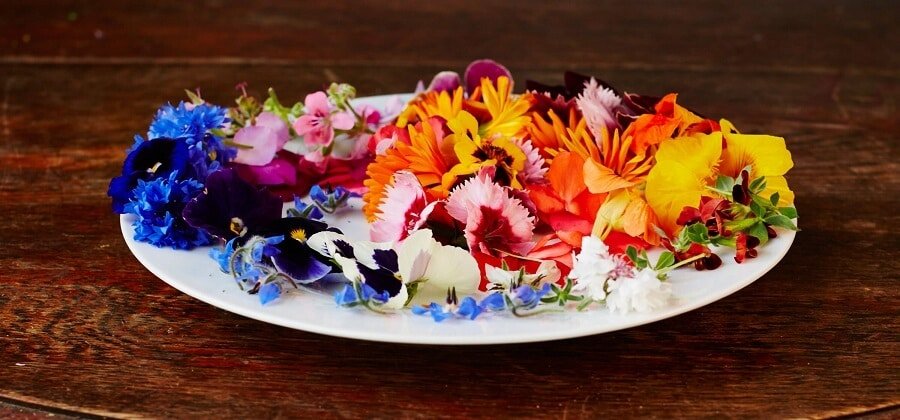
Some flowers can add color and flavor to food, but correct identification and food-safe growing practices come first. Choose plants by botanical name and use only the edible part. A flower sold for decoration is not automatically suitable to eat, even when its species appears on an edible-flower list.
Before harvesting any flower
Colorado State Extension’s edible-flower guide emphasizes identification and avoiding flowers from florists or ornamental nursery stock treated without food use in mind. Do not forage from roadsides or chemically treated lawns. If you cannot confirm the plant and its treatment history, leave it out of the meal.
Use sound flowers, rinse gently and handle them as fresh food. Introduce unfamiliar edible flowers sparingly, and avoid any ingredient to which you are allergic. Edibility is not a claim that a flower treats disease or provides a special health benefit.
1. Pansies and Johnny-jump-ups
Viola × wittrockiana and Viola tricolor offer colorful flowers for a small garnish. Grow them specifically for food use and verify the plant label. They can suit a cool-season display, but use local planting advice rather than expecting the same flowering dates everywhere.
2. Roses
Use correctly identified culinary rose petals from plants grown for consumption. Remove the bitter pale base where appropriate. Flavor varies, so start with a small quantity in a dish rather than assuming darker petals always taste stronger. A bouquet is not a food source.

3. Calendula
Calendula officinalis is also called pot marigold. Use the petals to add color to a salad or other dish. Do not treat every plant called “marigold” as interchangeable. University of Minnesota Extension describes calendula’s mildly peppery character and harvesting uses.
4. Nasturtium
Tropaeolum majus flowers bring a peppery flavor to salads and garnishes. Choose a bush or trailing variety to suit the space. Inspect blooms for insects before preparing them. A small number can supply plenty of flavor, so there is no need to strip the plant at once.
5. Chives
Allium schoenoprasum produces onion-flavored florets. Separate a flower head into smaller pieces for a savory garnish. Use a known culinary chive plant rather than identifying an unfamiliar bulb from the appearance of its flower.
Illinois Extension discusses chive flowers and squash blossoms as culinary options, alongside familiar ornamental flowers grown for food.
6. Bee balm
Monarda didyma is an edible-flowered herb sometimes called bergamot. It is not the citrus fruit of the same common name. Its aromatic flowers suit small culinary accents; verify the species rather than applying this advice to every plant with a similar name.
7. Dill
Anethum graveolens flowers can be used as an aromatic garnish. Minnesota Extension includes flower uses in its herb guidance. Decide whether to harvest flowers or leave some to produce seed; removing every flower head prevents that later harvest.
8. Basil
Ocimum basilicum has edible flowers as well as familiar leaves. Their flavor works best where basil already belongs in the dish. If leaf production is your priority, keep harvesting the plant appropriately rather than allowing the entire planting to flower at once.
9. Squash blossoms
Flowers from edible Cucurbita squash are a familiar cooking ingredient. Harvesting flowers affects the crop, so learn to distinguish male and female blooms and leave enough for pollination. Use a suitable recipe and inspect inside the blossom before preparation.
10. English lavender
Lavandula angustifolia can supply strongly scented culinary flowers. Use a food-grown plant and a small amount so it does not overwhelm the dish. Do not substitute lavender fragrance, decorative potpourri or essential oil for culinary flowers.
For species-specific lavender guidance, see Illinois Extension’s edible-flower advice.
Prepare and store them as food
Penn State’s consumer guide covers buying, growing, storing and using edible flowers, including confirming which part is edible. Keep harvested flowers cool and use them promptly. A garnish will be eaten along with the food, so it needs the same identification and handling care as any other ingredient.
The options above replace blanket advice to eat any honeysuckle, clover or tulip identified only by its common name. Do not use taste-testing to identify an unknown flower. If you want to try a plant outside this list, first obtain reliable species-specific food guidance and verify how it was grown.