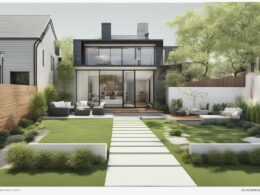
You may be able to build a pool in your backyard, but space alone does not answer the question. Local rules, property restrictions, ground conditions, construction access and safe ongoing operation all affect feasibility. Establish these basics before choosing a shape or paying for detailed design.
A useful first outcome is a site assessment and an itemized proposal showing what can be built, where and what is excluded. No general article can confirm permission for a particular address.
Check the property and local requirements
Ask the local planning or building office which approvals, inspections, setbacks, barriers and equipment rules apply to your proposed pool and property. Requirements may differ for inground, aboveground and temporary pools; smaller or removable products are not automatically exempt.
Use current survey and property information to identify boundaries, easements and restrictions. Check applicable association or covenant requirements separately from public approvals. Permission from one body does not necessarily satisfy another.
Before excavation, arrange the appropriate utility-location process and establish how private underground services will be identified. A contractor needs more than a rough guess about pipes and cables.
Measure the whole project footprint
The water area is only part of the space. Allow for circulation, steps, equipment, barriers, required clearances and maintenance access. Keep room for the parts of the yard you still want to use.
Construction equipment needs a route too. Narrow gates, trees, retaining walls and buildings can change methods and cost. Ask what must be removed, protected and restored, and who is responsible. A pool that fits can still be difficult or expensive to install.
Assess ground and drainage
Slopes, fill, rock, groundwater and poor drainage may require additional design or make an option unsuitable. A pool is a major structure with substantial water weight. Flat-looking ground is not necessarily ready for installation. Follow the manufacturer’s and designer’s requirements rather than a generic leveling method.
Ask what site investigation is included, what could trigger extra work and how drainage will avoid causing problems for neighbors. Structural, electrical and plumbing work should be handled by appropriately qualified people under applicable rules.
Compare types by actual requirements
- Site-built inground pools: may offer design flexibility, but require a defined structural design, construction sequence and finish specification.
- Fiberglass: a manufactured shell still requires delivery access, excavation, installation and equipment.
- Vinyl liner: supporting construction and equipment are needed, along with a plan for eventual liner replacement.
- Aboveground: requires a suitable base, safe access, barriers and water care despite a different installation process.
- Natural swimming systems: need specialist design and maintenance. Plants alone are not a general guarantee of safe water.
Compare proposals with the same usable size, equipment, access arrangements and completion standard. A shell price is not a finished-project price.
Include safety in the first design
Barriers and gates belong in the layout and budget from the start. The CPSC barrier guide is a safety reference, not a replacement for local requirements. Ask how the layout limits unsupervised access, including access from the house.
The CDC’s pool guidance addresses supervision and healthy water. Swimming ability, alarms and flotation toys do not eliminate attentive supervision. Plan who will test and maintain the water and how chemicals will be stored securely.
Check the budget over time
Include design, approvals, site work, utilities, equipment, barriers and restoration. Then estimate electricity, water, treatment, cleaning, servicing and replacement costs. Ask your insurer about the installation before committing.
Use the separate backyard pool cost guide to compare scope and build a budget. A pool may be worthwhile for household use, but a guaranteed resale gain should not be the basis of the decision.
Check the builder and the finishing plan
Before agreeing to work, check the builder’s applicable credentials with the issuing authority, ask for evidence of insurance, and contact recent customers about comparable installations. Get a written scope assigning responsibility for approvals, inspections, subcontracted work, cleanup, and repairs to access routes. Ask how changes and unexpected ground conditions will be priced and approved.
Include landscaping and accessories in that plan. Consider leaf debris, maintenance access, and how planting or furniture might affect supervision and access barriers. Ask the qualified designer or installer to review lighting and other electrical accessories near water. A decorative feature should not compromise the safety layout.
Take the next practical step
Gather property information, photos and your intended use for a qualified local builder or designer. Request written answers about approvals, access, drainage, safety and exclusions. Reduce the size, change the design or defer the project if those questions cannot be resolved.