For a backyard harvest of a named apple variety, start with a grafted nursery tree on a rootstock suited to your space and climate. Growing a seed from an apple is an interesting experiment, but it will not reliably reproduce that fruit or provide a predictable tree size. Both projects are possible; they have different expectations.
1. Choose a tree and pollination partner
Ask for the cultivar and rootstock names, expected mature dimensions, local climate suitability and support requirements. “Dwarf” alone does not tell you everything about a tree. Disease resistance can reduce particular problems, but it is not immunity to all pests and diseases.
Most apples crop best with pollen from a compatible, genetically different variety flowering at the same time. Two trees of the same cultivar do not solve that problem. Some apples are partly self-fertile, while some varieties are poor pollen donors. Confirm the pairing with a reliable nursery or local extension service before purchase.
2. Prepare a suitable planting place
Choose full sun and well-drained soil, allowing room for the mature tree and access for maintenance. Spacing depends on rootstock and training system; every apple tree does not need a thirty-foot gap. Test the soil and correct identified problems before planting rather than automatically targeting a neutral pH.
The University of Minnesota apple guide explains cultivar selection and site planning. Its regional variety advice should be interpreted for your own climate rather than copied unchanged into a warmer region.
3. Plant to the roots, not an arbitrary hole depth
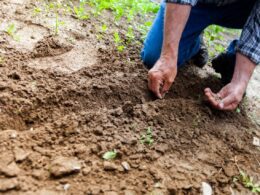
Follow the nursery’s directions for bare-root or container stock. Keep roots from drying before planting, inspect their arrangement and prepare a hole wide enough to accommodate them. Set the tree at the appropriate root depth, keeping the graft union above the finished soil level as directed for that rootstock. A fixed two-foot-deep hole can bury a small tree too deeply.
Backfill, water thoroughly and maintain a weed-free area around the young tree. Keep mulch away from the trunk. Install support where the rootstock or site requires it, and check ties as the trunk grows. Penn State’s planting guidance covers the importance of graft placement and early establishment.
4. Water according to the root zone
Check newly planted trees frequently because their roots initially occupy a limited volume. Water slowly when needed to moisten that zone, allowing drainage. Small potted seedlings may dry much faster than established trees; waiting ten or twelve days simply because a seedling is short is unreliable.
Adjust for soil, rainfall, heat and tree establishment. Neither a permanently soggy planting hole nor repeated severe drying is helpful. Continue monitoring in dry spells after the first season rather than assuming rainfall will always suffice.
5. Feed only when justified
Use soil-test results and growth to decide whether fertilizer is needed. Do not automatically apply half a pound of a particular fertilizer per inch of trunk diameter. Account for nutrients already supplied nearby and follow locally appropriate recommendations and the label. Keep weed-and-feed products away from the tree’s care routine.
6. Train young trees and prune with a purpose
Young trees need thoughtful training; waiting until fruiting begins can leave poorly placed branches to become larger problems. Many backyard apples use a central-leader system, but other systems require different decisions. Maintain the intended structure, remove dead or damaged wood and address crossing branches. Do not remove every upright shoot indiscriminately.
Prune at the locally recommended dormant-season time, avoiding excessive removal. Get advice before attempting major work on a neglected mature tree. Iowa State’s home-apple guide covers training, watering and managing crop load.
7. Monitor pests and the developing crop
Inspect foliage, bark and fruit regularly. Protect young trunks from animal damage with suitable guards that do not constrict growth. Identify the insect or disease before choosing treatment. A generic spray and a red sticky ball hung in June are not universal solutions: pest presence, trap use and timing depend on location and the problem.
Use local extension recommendations and labeled products where needed, observing harvest intervals and pollinator precautions. Remove fallen, damaged fruit as part of sanitation. If the tree sets a heavy crop, follow variety-appropriate thinning guidance rather than letting overloaded branches carry every apple.
Growing an apple from seed as a separate experiment
Label seed-grown trees as seedlings, not as the variety of the apple eaten. They may become large and take years to bear, with unpredictable fruit quality. You can supply the needed cold, moist period outdoors in autumn or under controlled refrigeration; direct outdoor sowing is not inherently doomed.
Iowa State’s seed instructions describe protected autumn sowing and a refrigerated moist-sand method lasting ninety to one hundred twenty days. Keep the medium moist rather than waterlogged, monitor the seeds and give emerging seedlings suitable light and protection. Grow them on and acclimate them before moving to a permanent site. Treat this as a learning project, while a grafted tree is the more predictable choice for a planned orchard.
Featured image source: 1